
A Normandy day trip from Paris is the longest, most emotionally weighted excursion on most Paris itineraries. You leave the hotel before 7am, sit on a bus for three hours each way, and spend the middle of the day standing on a stretch of windswept sand where, on the morning of June 6, 1944, 156,000 Allied soldiers came ashore to begin the liberation of Western Europe. Nine thousand of them never left. This is not a tour you take for fun. You take it because you want to understand what happened at Omaha Beach, Pointe du Hoc, and the Colleville-sur-Mer American Cemetery with your own eyes, and because some history doesn’t translate through a documentary.
The good news is that the four tours below cover the main approaches well: the volume-leading full-day coach trip with lunch included, the premium small-group experience, the mid-priced American Cemetery-focused bus tour, and the Bayeux-based option for travelers who can stay overnight nearby and skip the six hours of round-trip driving entirely. Each one trades time, money, and group size in a different mix. Picking right depends on which of those three factors matters most to you.
- Quick Picks: Three Normandy D-Day Tours Worth Your Attention
- Best High-Volume Full-Day From Paris
- Best Small-Group Premium Experience
- Best Short-Distance Option From Bayeux
- Why a Normandy Day Trip Is Different From Every Other Paris Excursion
- Four Best Normandy D-Day Tour Options Compared
- 1. Normandy D-Day Landing Beaches Day Trip With Cider Tasting & Lunch From Paris — 0.93
- 2. Normandy D-Day Small-Group Day Trip With Omaha Beach, Cemetery & Cider Tasting — 0.46
- 3. Normandy D-Day Beaches and American Cemetery Day Trip From Paris — 7.27
- 4. Normandy American D-Day Beaches Full Day Tour From Bayeux — 9.30
- What the Day Actually Looks Like
- Historical Frame: What Actually Happened on June 6, 1944
- Practical Tips for the Day
- Normandy Alternatives: When a Day Trip Isn’t Enough
- More Paris Guides Worth Reading
- Final Word
Quick Picks: Three Normandy D-Day Tours Worth Your Attention
If you only have a minute to pick, these are the tours that solve the most common problems.
Best High-Volume Full-Day From Paris
Normandy D-Day Landing Beaches Day Trip With Cider Tasting & Lunch From Paris — $120.93 per person, 14 hours, 5.0 stars from 6,877 reviews. The market leader for a reason. You get hotel-area pickup, coach transport, a guide throughout, Omaha Beach, the American Cemetery, a restaurant lunch stop, and a Norman cider tasting on the way back. It’s the cheapest way to do the full day with everything packaged, and the 6,877-review base means the operator has refined the logistics to a fine edge.
Best Small-Group Premium Experience
Normandy D-Day Small-Group Day Trip With Omaha Beach, Cemetery & Cider Tasting — $320.46 per person, 12 to 13 hours, 5.0 stars from 2,786 reviews. The small-group alternative for travelers who find coach tours overwhelming. Minivan-sized groups, more time at each stop, better guide interaction, and fewer bathroom-break negotiations. At almost triple the price of the volume option, it’s only worth it if group intimacy and pacing matter more than cost.
Best Short-Distance Option From Bayeux
Normandy American D-Day Beaches Full Day Tour From Bayeux — $169.30 per person, 9 hours, 5.0 stars from 2,103 reviews. The secret-handshake option. If you stay overnight in Bayeux (a charming Norman town 20 minutes from the landing beaches), you can skip the six hours of round-trip Paris driving and get a nine-hour tour instead of fourteen. You see more, you walk more, and you aren’t wrecked by the time you get home.
Why a Normandy Day Trip Is Different From Every Other Paris Excursion
Before you book, understand what you’re signing up for. A Normandy day trip from Paris is not a scenic coach outing with historical commentary. It’s a long, emotionally heavy experience, and the logistics reflect that.
The physical distance from Paris to the landing beaches is roughly 270 kilometers (170 miles), which translates to 2 hours 45 minutes to 3 hours 15 minutes each way depending on traffic and exactly which beach you visit. That means a full-day tour spends six hours on the road. The best operators use comfortable coaches with restrooms, stop for a breakfast break on the way out, and play documentary footage during the drive to orient you. The worst ones use older buses, skip the on-board commentary, and treat the drive as dead time.
Once you arrive, you typically see three to five of the following sites: Omaha Beach, Pointe du Hoc, the Colleville-sur-Mer American Cemetery, the Utah Beach museum, Arromanches (site of the artificial Mulberry harbor), Sainte-Mère-Église, the Caen Memorial Museum, and one or two smaller cemeteries or memorial points. No full-day tour covers all of these—there isn’t enough time. Most tours pick Omaha Beach and the American Cemetery as the core, then add one or two supplementary stops depending on the operator’s itinerary. Read the listing carefully before booking so you know what you’re getting.
Lunch is usually included in the ticket price or offered as an add-on. The typical restaurant stop is in Port-en-Bessin or Arromanches and runs 45 to 75 minutes. Food quality varies widely. Some tours deliver a proper Norman set menu (galette, cider, apple tart); others drop you at a tourist café and leave you to order. The 6,877-review Viator tour has had mixed reviews on the lunch itself over the years. If food matters to you, check recent reviews for the specific meal arrangement.
The cider tasting, when included, is a genuine highlight. Normandy is France’s apple country (not grape country), and the region’s ciders, calvados (apple brandy), and pommeau (cider-calvados blend) are worth a dedicated stop. The tasting is usually at a small producer between the cemetery and the drive back to Paris, and it provides a much-needed emotional decompression after the cemetery visit. Even if you don’t drink, stop in—the farm atmosphere is part of understanding the region.
Weather matters more than for any other Paris day trip. Normandy sits on the English Channel and the weather is actively hostile to casual tourism from November through March. Strong wind, rain, and 40-mph gusts off the water are normal. The beaches are open in all weather but the cemetery’s reflective pool looks dramatically different under overcast skies than under sun. If you have flexibility, book April through October.
Four Best Normandy D-Day Tour Options Compared
These four tours represent the main structural choices: budget full-day coach, premium small-group, mid-priced coach with cemetery focus, and local Bayeux-based tour for travelers who can stay overnight nearby.
1. Normandy D-Day Landing Beaches Day Trip With Cider Tasting & Lunch From Paris — $120.93
Duration: 14 hours
Rating: 5.0 stars from 6,877 reviews
Price: $120.93 per person
Book: View on Viator
This is the definitive Normandy day trip from Paris. Almost 7,000 reviews and a 5.0 rating puts it in a rare tier of affiliate-market tours where the volume alone is a quality signal. The operator runs the same itinerary daily: central Paris pickup, Omaha Beach, the Normandy American Cemetery, a lunch stop, a cider tasting, and return. Total time is 14 hours door-to-door, and you spend about half of that on the road.
Review feedback consistently praises the guides. Sam, Raymond, and “Ricardo” type names come up repeatedly as historically well-informed, emotionally grounded, and good at pacing the bus commentary. One guest described the trip as “extraordinarily powerful” and wrote that their guide “brought all the emotional notes to truly appreciate what happened at the places we visited” and “filled the time on the bus with amazing stories.” Another noted the comfortable bus and the efficient time management. The negative reviews mostly flag one of three issues: a disappointing restaurant lunch, a difficult-to-understand guide accent, or (rarely) a last-minute cancellation under a different operator name (City Wonder Tours, which uses this listing). The core product is solid.
Good fit if: You want the cheapest complete package from Paris, you’re on your first Normandy visit, or you want the Cemetery and Omaha Beach with a decent lunch and cider tasting bundled in. Skip it if: Large coach groups bother you, you dislike 6 hours of coach driving, or you want extended time at each site.
2. Normandy D-Day Small-Group Day Trip With Omaha Beach, Cemetery & Cider Tasting — $320.46
Duration: 12 to 13 hours
Rating: 5.0 stars from 2,786 reviews
Price: $320.46 per person
Book: View on Viator
This is the same core itinerary as the volume option but delivered in a minivan-sized group with a premium guide and a slightly shorter total day (12-13 hours instead of 14). The higher price pays for smaller group size (typically 8-16 people), longer dwell time at each site, and a more conversational guide relationship. It also usually includes a higher-quality lunch and cider tasting rather than a tourist-café drop.
The 5.0 rating from nearly 2,800 reviews is earned on the quality of the guide-to-guest ratio. One guest described their guide Bryn as having “such a passion for history” and making the day “special,” noting a ceremony at the cemetery including “the playing of Taps” at the end of the visit. Another praised guide Augustin for his unique regional insights, having been “raised a short distance from Normandy.” Negative reviews exist and tend to focus on the price-to-experience ratio: one guest spending “close to $1000 for this small group tour” felt it didn’t deliver enough extra versus the cheaper coach option. The consensus is that the small-group format is worth it if you specifically value the smaller size, not if you’re looking for dramatically different content.
Good fit if: You dislike coach tours, you’re traveling with someone who needs more careful pacing, you want a higher-quality lunch, or you can easily absorb the premium price. Skip it if: You’re budget-conscious, you don’t mind coach groups, or you want the lowest total cost for the same core itinerary.
3. Normandy D-Day Beaches and American Cemetery Day Trip From Paris — $207.27
Duration: 13 hours
Rating: 4.5 stars from 2,673 reviews
Price: $207.27 per person
Book: View on Viator
This is the middle-tier option: a coach-based day trip from Paris with the American Cemetery as the anchor experience, priced between the budget volume leader and the premium small-group tour. At 13 hours it’s slightly shorter than the $120 option. Groups are usually mid-sized (coach or larger minivan, 20-30 people). The itinerary typically includes Omaha Beach, the cemetery, and a lunch stop, with some variation by day.
The 4.5 rating is lower than the other three tours on this list, and the review pattern explains why. Happy guests praise the guides by name (Steve, Camille, Ann all come up in recent reviews as knowledgeable and well-paced), highlight the comfortable bus rides, and describe memorable stops at Omaha Beach and the cemetery. Unhappy guests flag three specific issues: sometimes the tour runs in a smaller van instead of a full coach, weather disruption at cold/windy sites, and a December 31/January 1 cemetery closure that caught guests off guard (the operator should flag holiday closures more clearly). The 4.5 rating reflects a real consistency issue between the coach and van formats. If you book, confirm which vehicle you’ll be in before the day.
Good fit if: You want a mid-priced coach tour with American Cemetery focus, and you’re booking for a non-holiday date with good weather. Skip it if: You’re traveling around a major holiday, you want guaranteed coach (not van) transport, or you’d rather spend a little more for the small-group experience or a little less for the volume leader.
4. Normandy American D-Day Beaches Full Day Tour From Bayeux — $169.30

Duration: 9 hours
Rating: 5.0 stars from 2,103 reviews
Price: $169.30 per person
Book: View on Viator
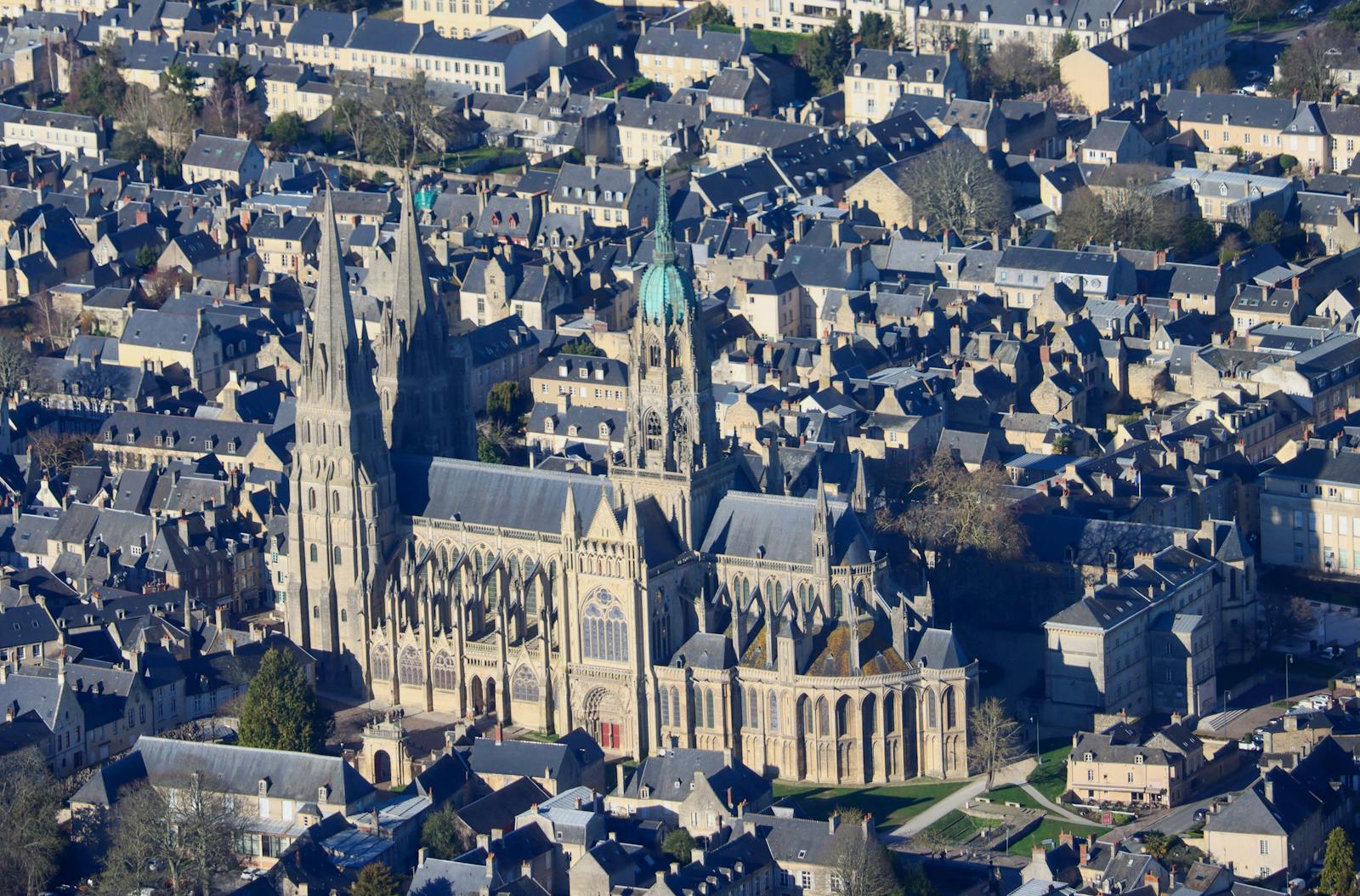
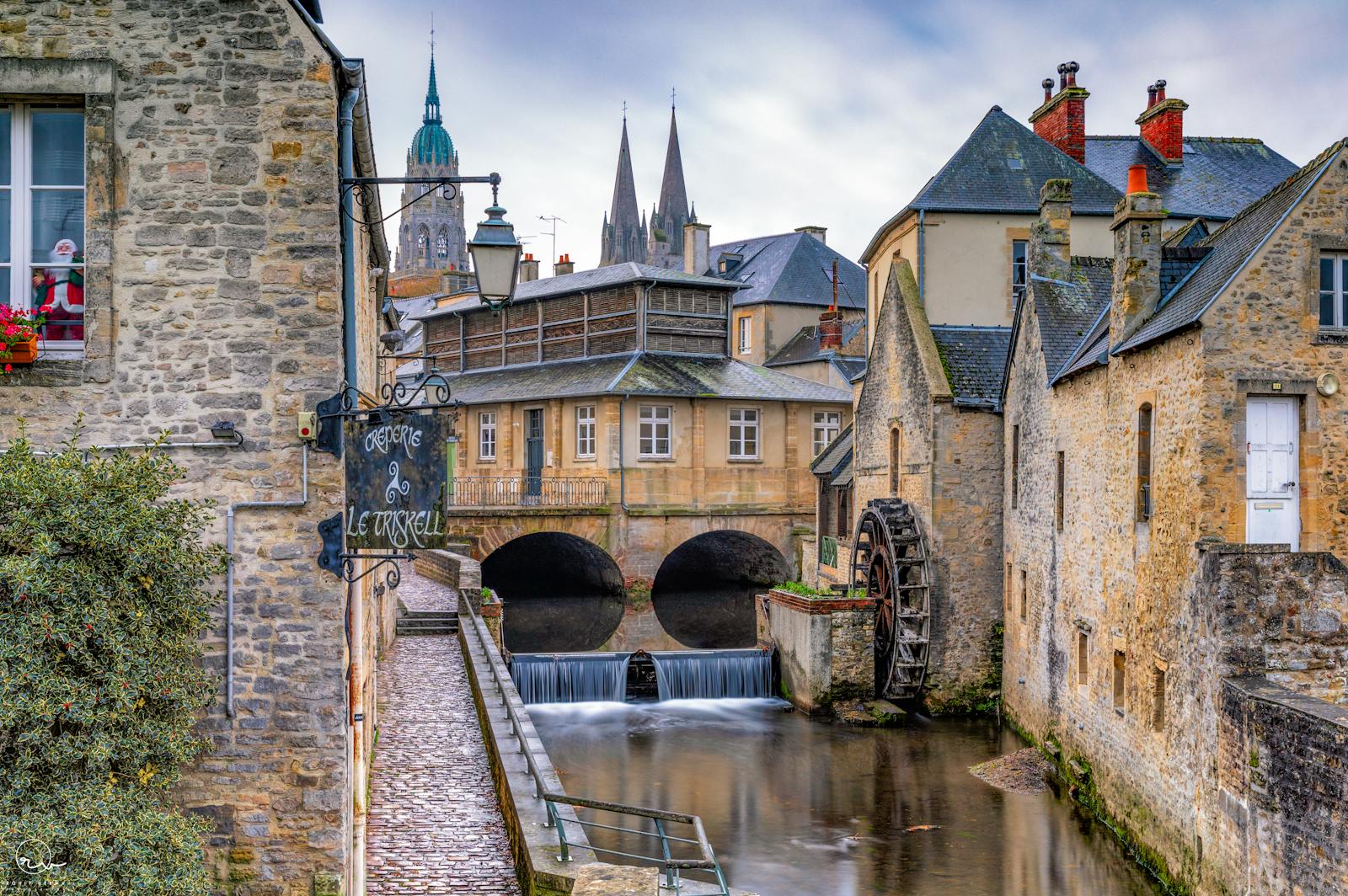
This is the option most Paris visitors overlook because it requires staying overnight in Bayeux the night before. Bayeux is the largest town near the landing beaches (population around 13,000) and is famous for its 230-foot embroidered chronicle of the 1066 Norman conquest of England (housed in a dedicated museum in the old town). It’s a 20-minute drive from Omaha Beach, has direct train service from Paris (2 hours 15 minutes from Saint-Lazare), and makes an excellent overnight base for anyone who wants more Normandy depth than a day trip allows.
The tour itself is 9 hours instead of 14, which means more time at each stop and less time on the road. The 5.0 rating from 2,100+ reviews is notable. Guest feedback consistently mentions the guides: Annie described her guide David as “super knowledgeable, and enthusiastic… with knowledgeable and detailed answers”; Loren noted the trip was “very moving and informative” even “though it rained all day”; Rhonda called her guide Julie “incredibly knowledgeable and fun” with the “full day tour went by quickly, never a dull moment.” Vincent, visiting in December, offered the practical advice to “dress for the weather and the cold winds off of the Channel.” David (the guest, not the guide) recommended staying in Bayeux the night before because “the van picks up at 8:30 a.m. and returns approx 5 p.m.”
Good fit if: You can add an overnight Bayeux stop to your itinerary, you want more time at the beaches, or you want the full Norman experience including the medieval Norman conquest museum. Skip it if: You only have one day total in France for Normandy, or you want the all-in-one Paris departure convenience.
What the Day Actually Looks Like
Here’s the typical flow for a full-day Normandy tour departing Paris at 7am. Your guide meets the group at a central Paris pickup point (often near the Opéra or a coach parking area like Rue de Berri off the Champs-Élysées). Everyone boards the coach, the guide does a safety briefing, and you roll out of the city by 7:15 or 7:30. The drive to the first stop is about three hours with a quick rest break around the halfway point at a highway service area. Most guides use this drive time for historical orientation, documentary footage, or a structured audio introduction to the D-Day campaign.
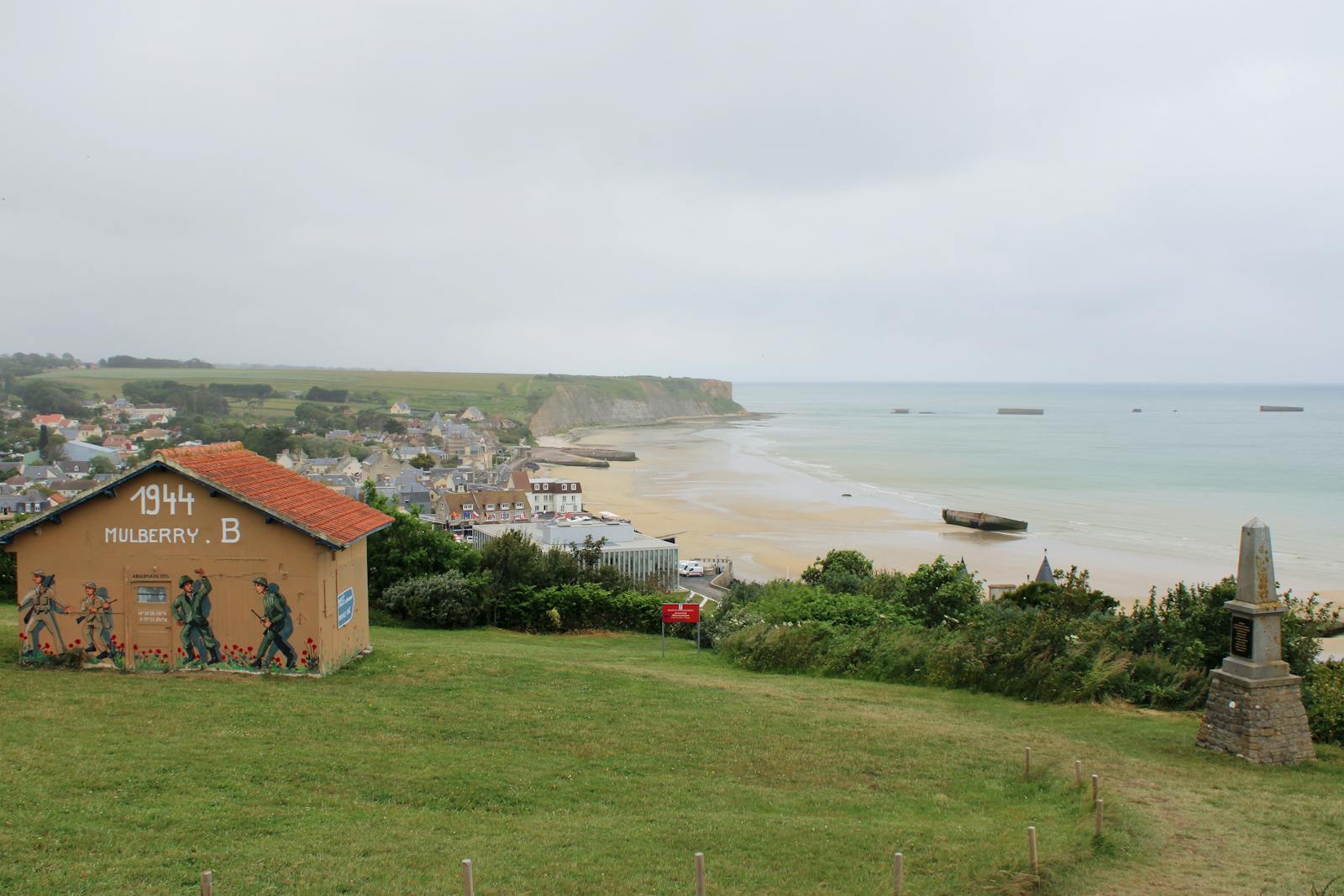
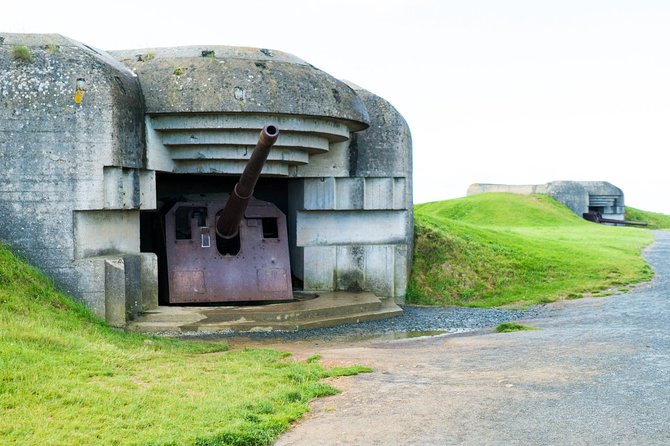
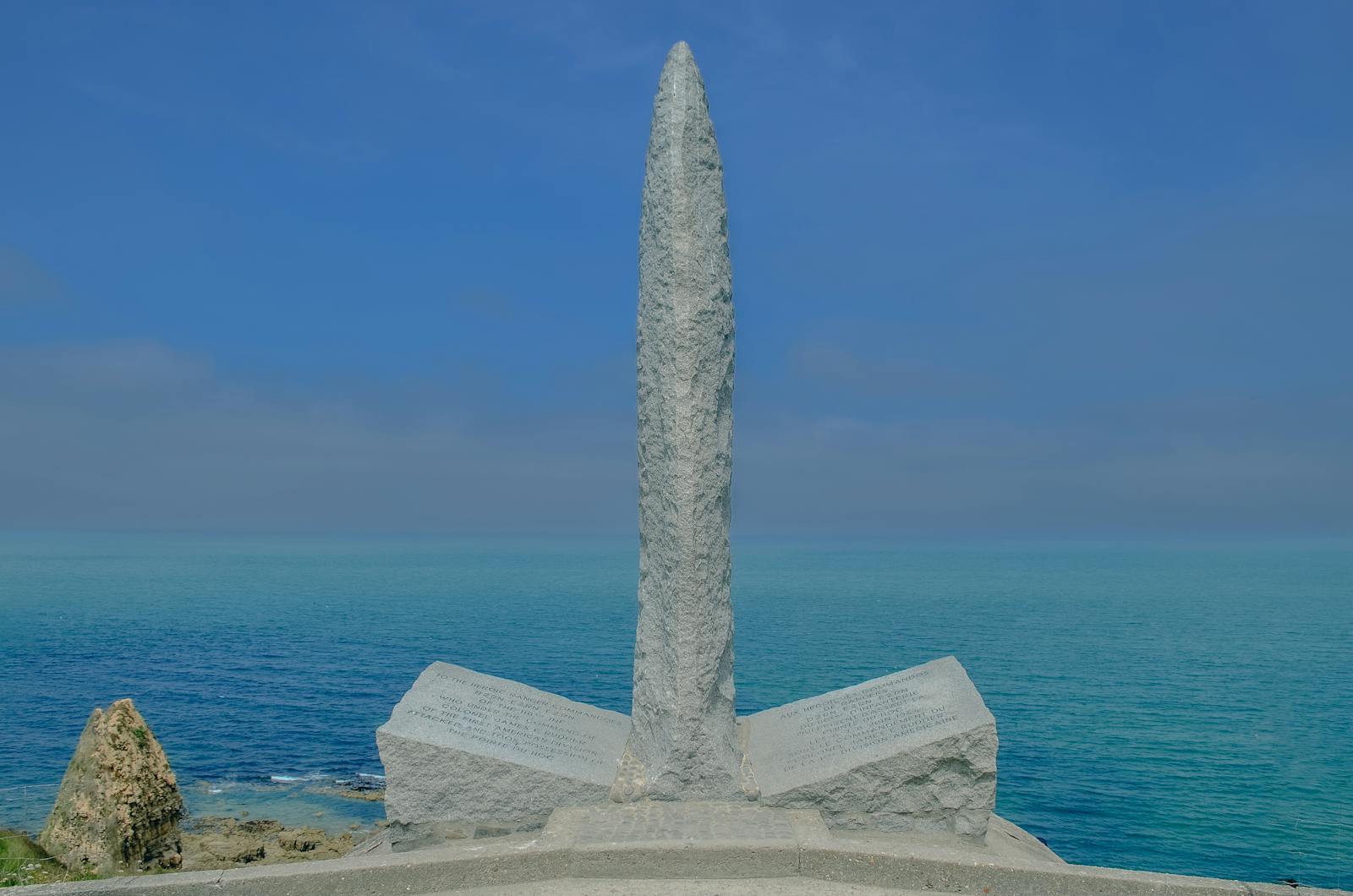
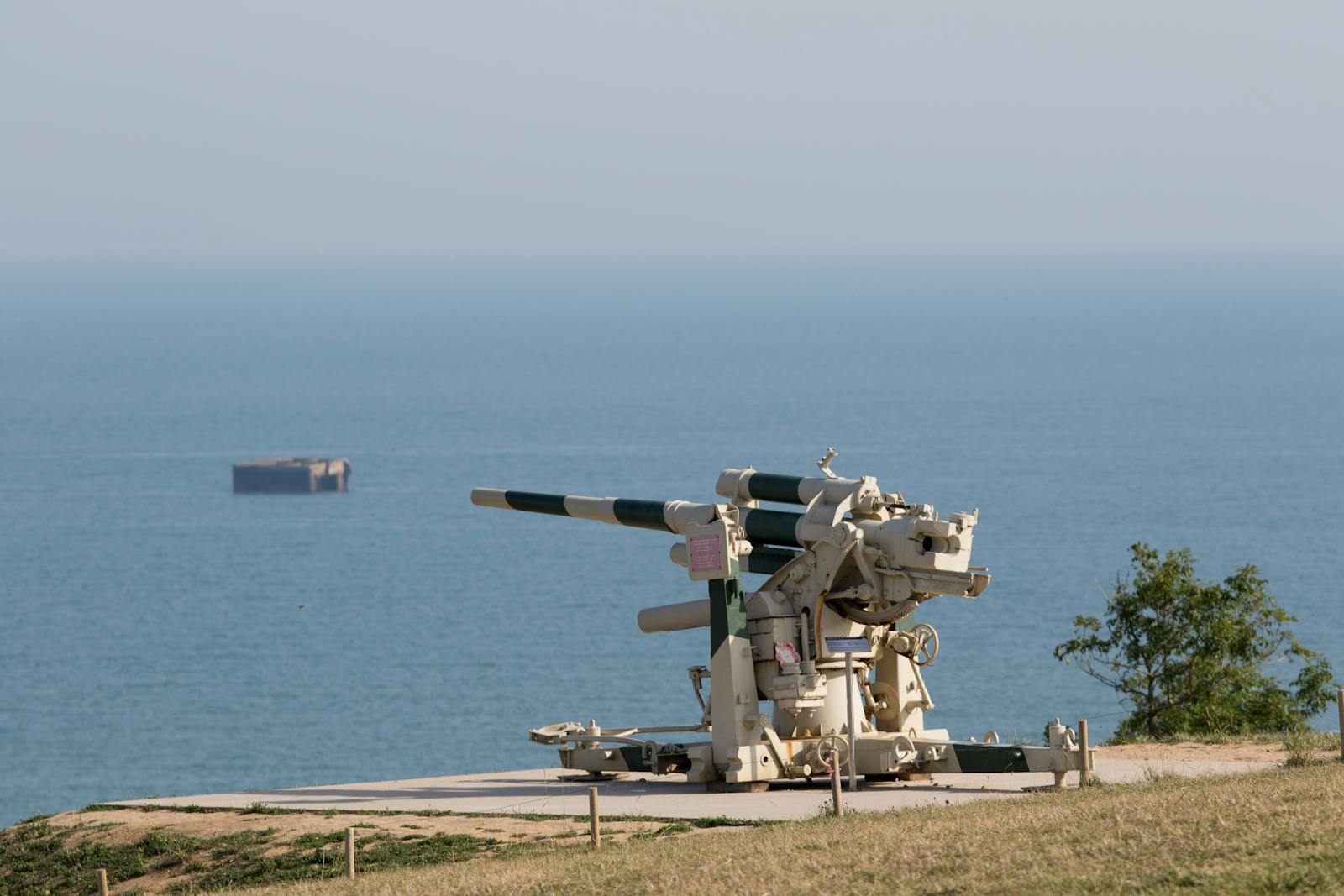
The first stop is often Pointe du Hoc, a 100-foot cliff that US Army Rangers scaled under fire on the morning of June 6 to silence German coastal artillery. The cliff is now a preserved memorial with visible bomb craters, concrete bunkers, and a simple granite monument at the point. The site is outdoors and open to the elements. Expect to walk about 30 minutes on grass and gravel paths. If the weather is bad, this is where you’ll feel it.
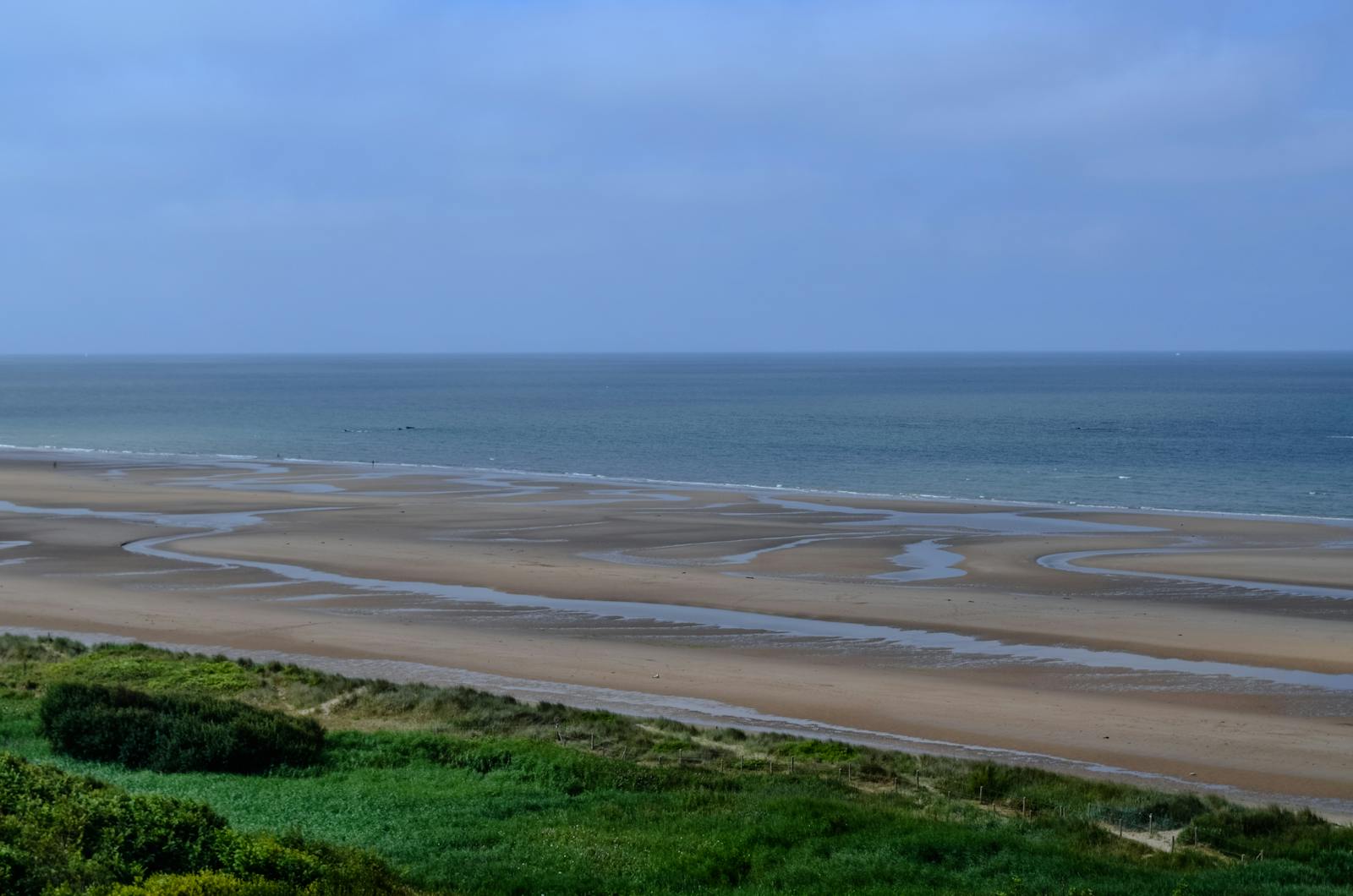
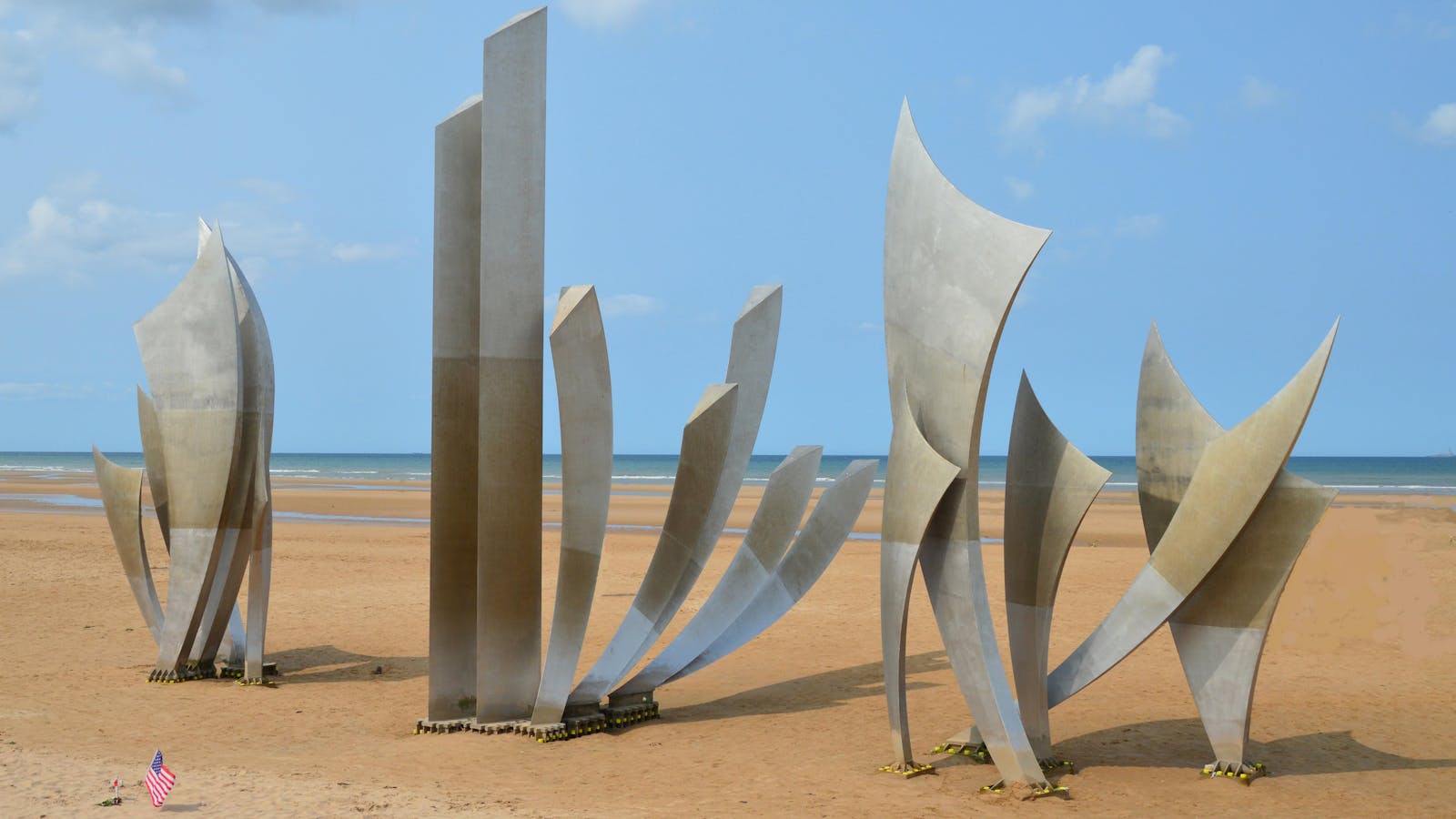
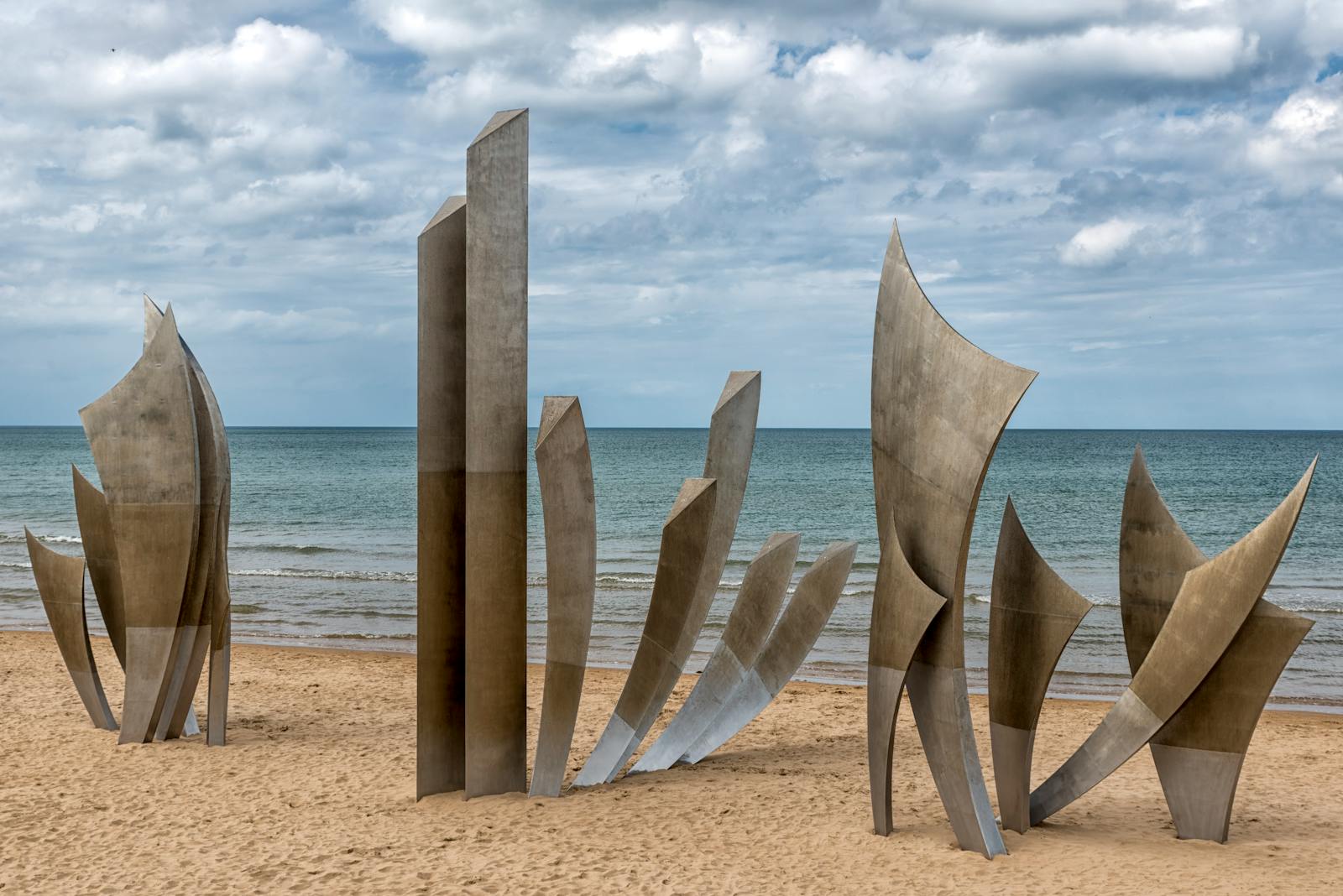
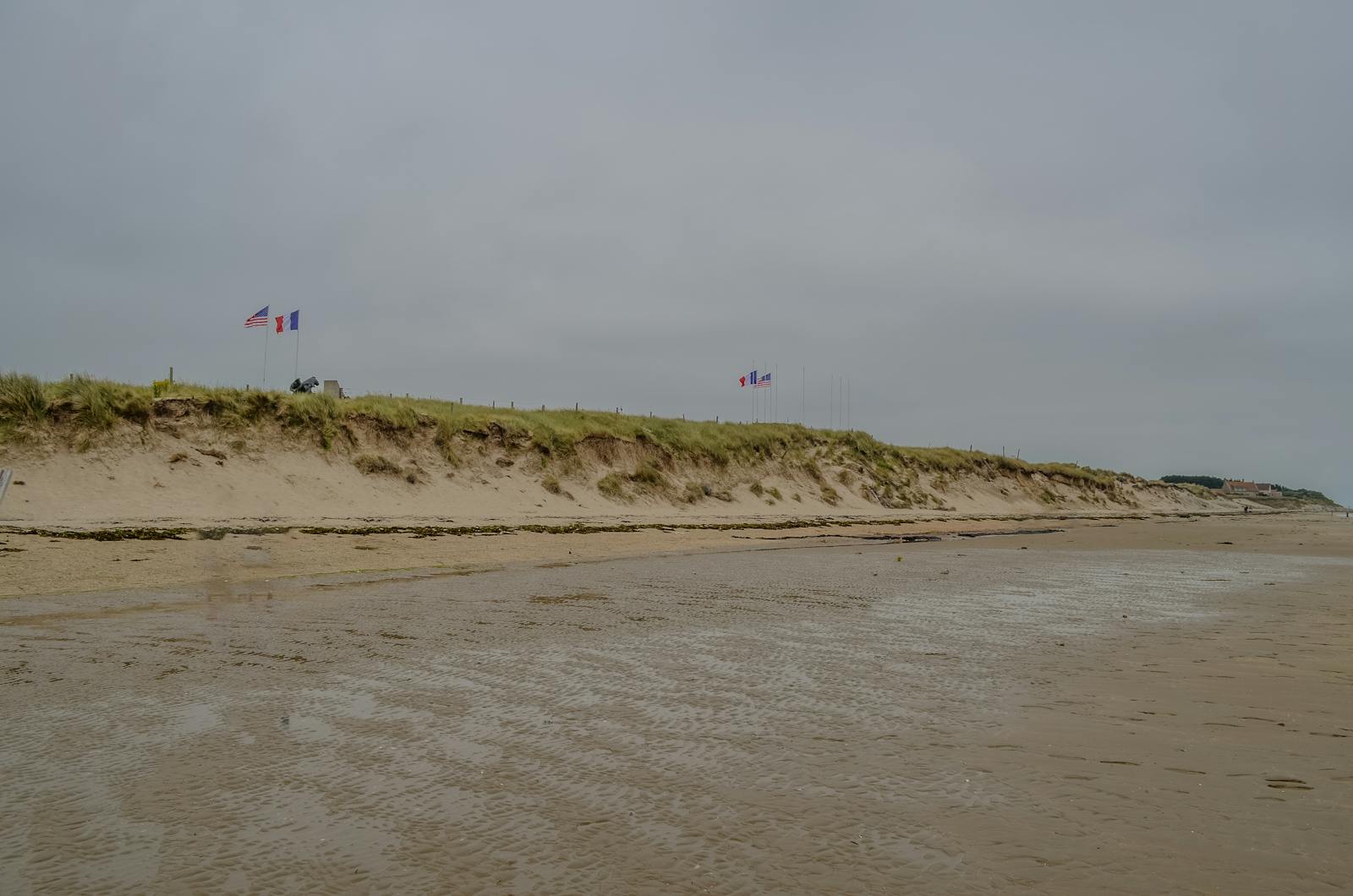
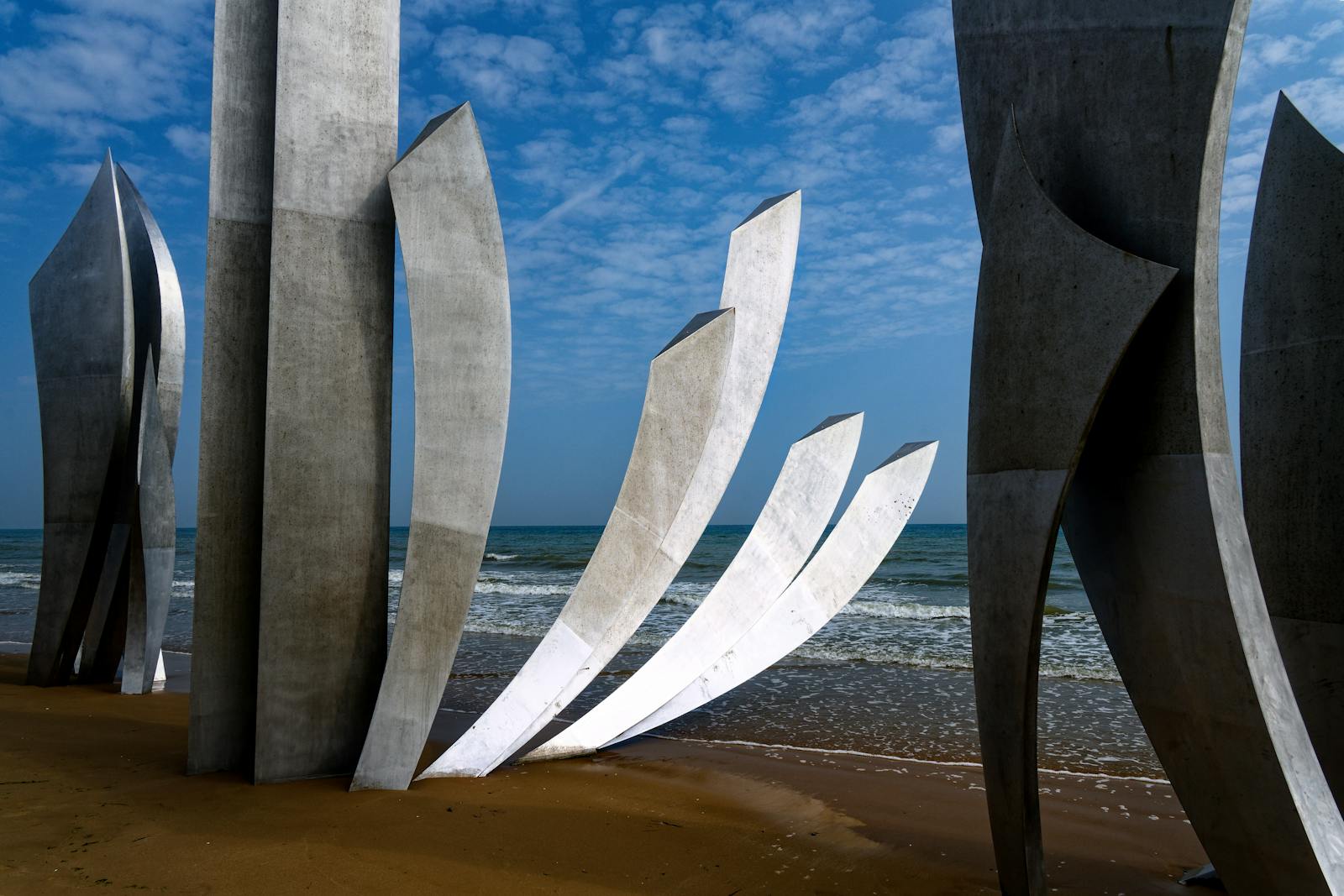
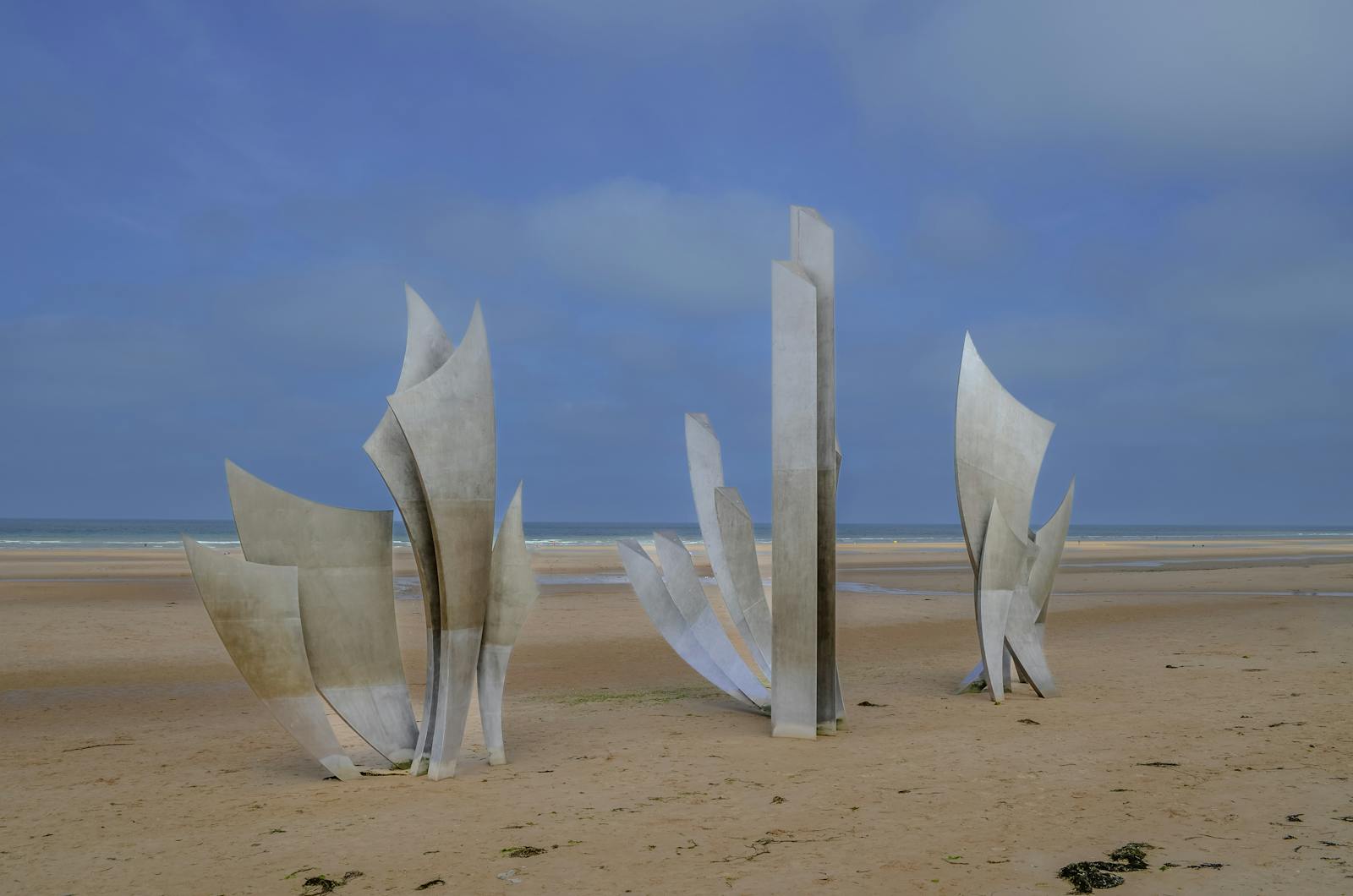
From Pointe du Hoc, most tours continue to Omaha Beach itself. The beach extends for about 8 kilometers along the coast at Vierville-sur-Mer, Saint-Laurent-sur-Mer, and Colleville-sur-Mer. Tours typically stop at the Les Braves memorial sculpture at Saint-Laurent-sur-Mer, a cluster of steel pillars on the sand that commemorates the landing. You walk onto the beach, your guide describes what happened at this specific stretch of coast on that morning, and you have 20 to 40 minutes to take in the scale of the site. Bring sturdy shoes—the sand is fine and wet year-round.
Lunch comes next, usually in Port-en-Bessin or Arromanches, a nearby coastal town. Lunch time is 45 to 75 minutes depending on the tour. This is a good opportunity to use restrooms, warm up, and mentally reset before the cemetery visit. If you’re doing the cider-tasting tour, the cider stop is often after lunch on the way back or at a producer near the cemetery.
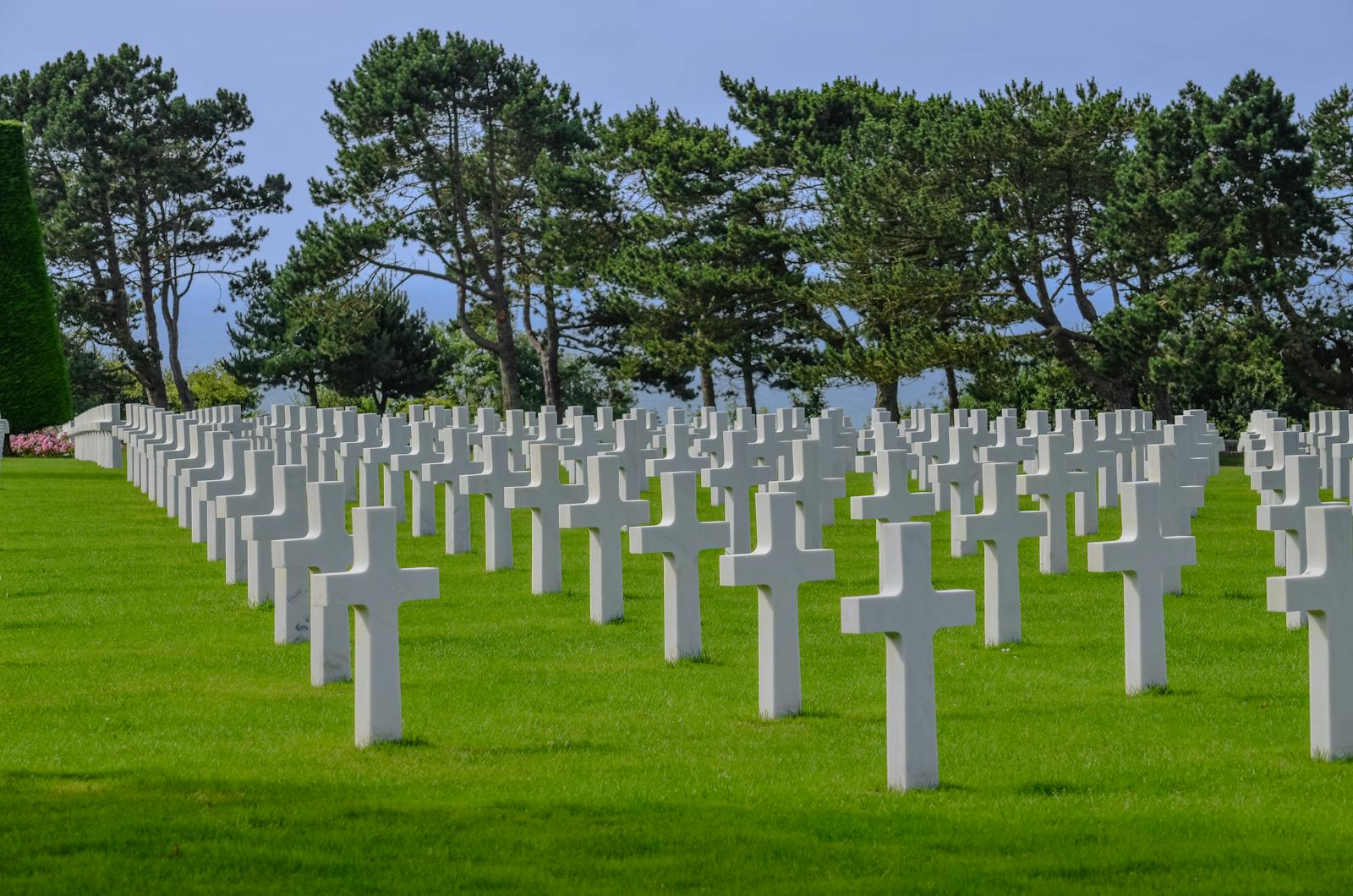
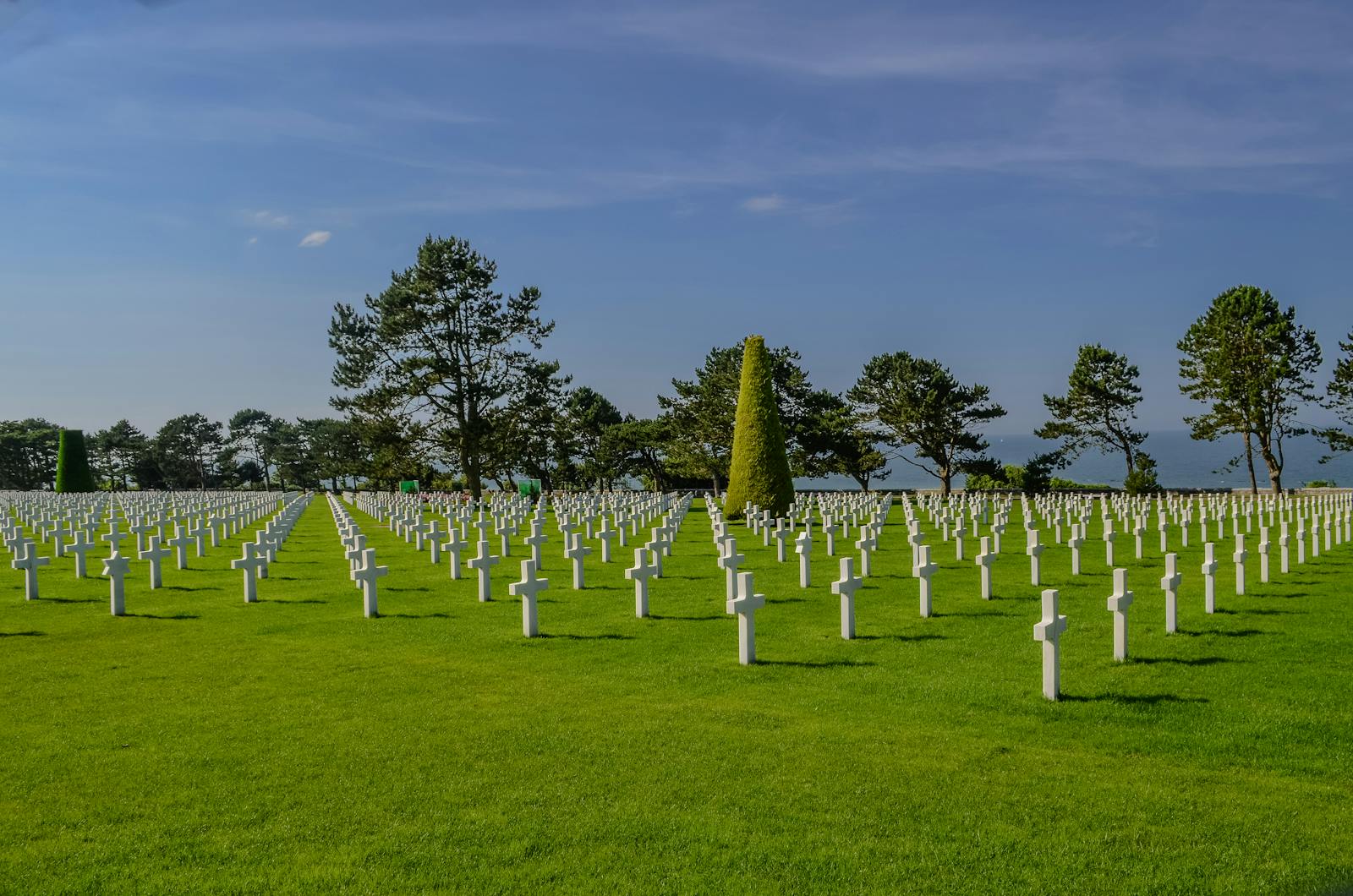
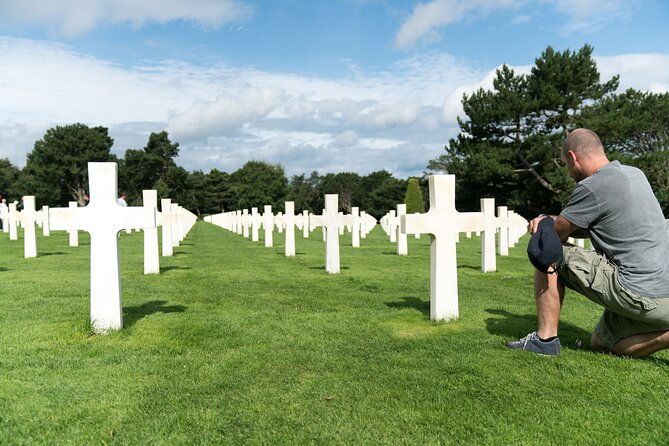
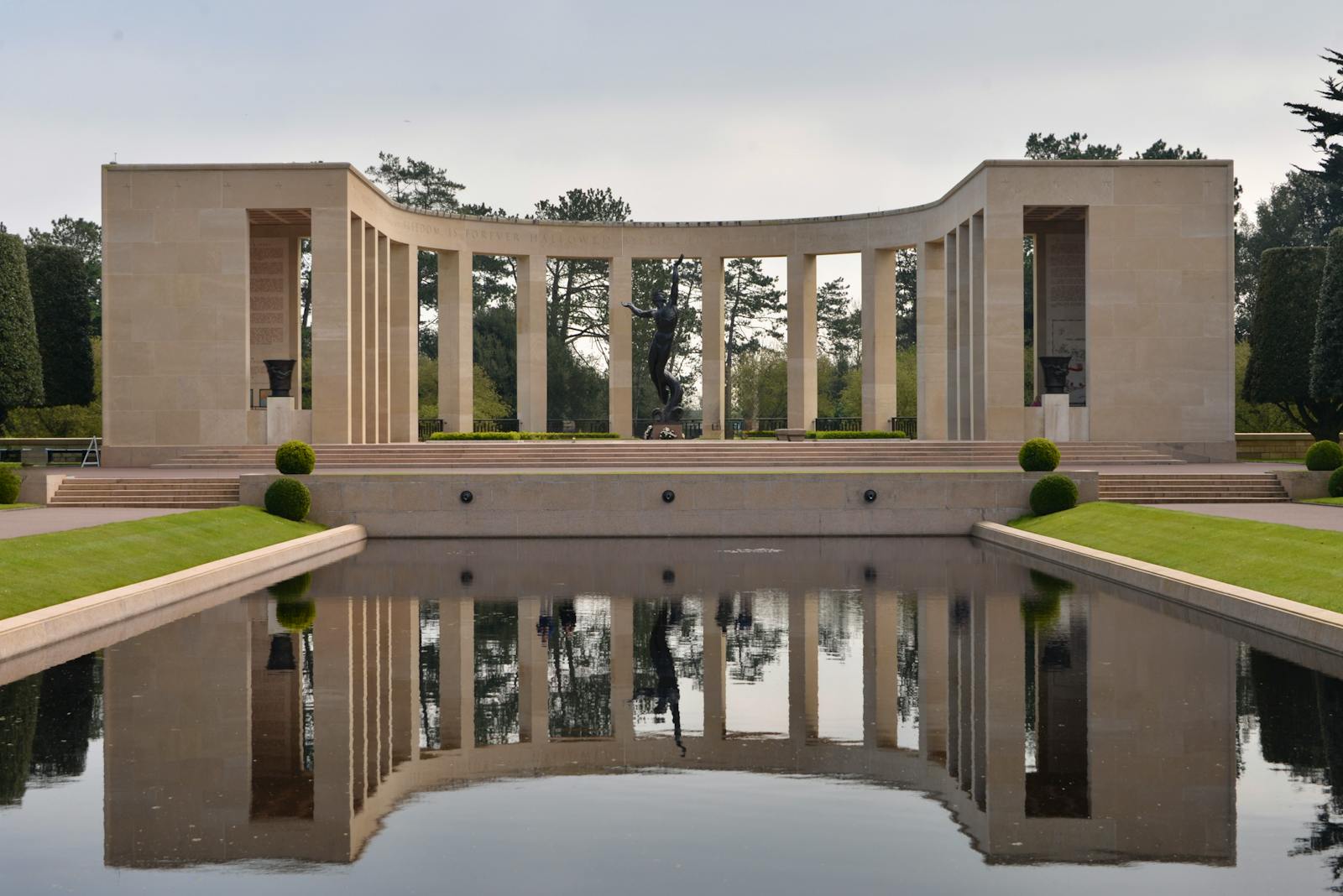
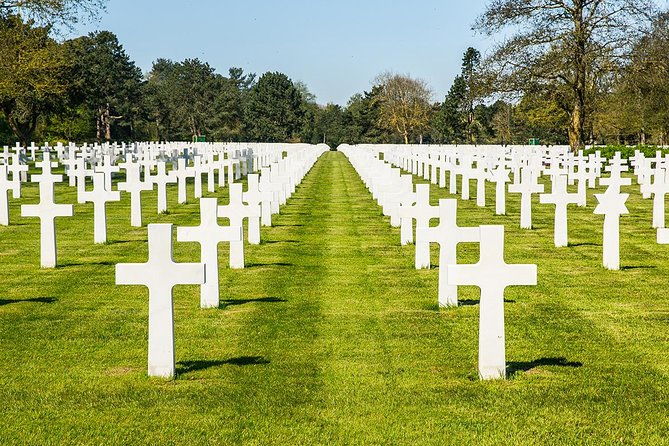
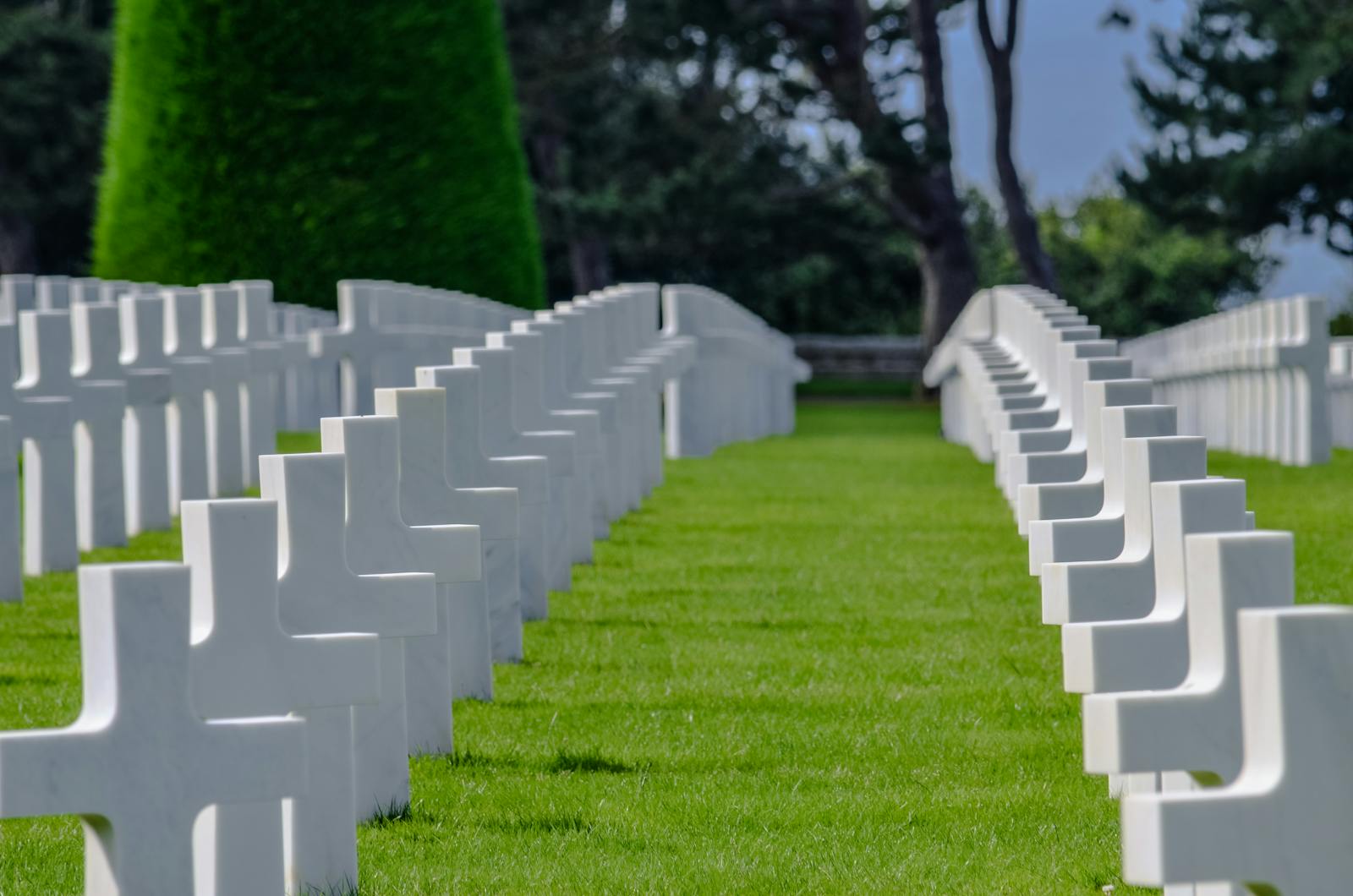
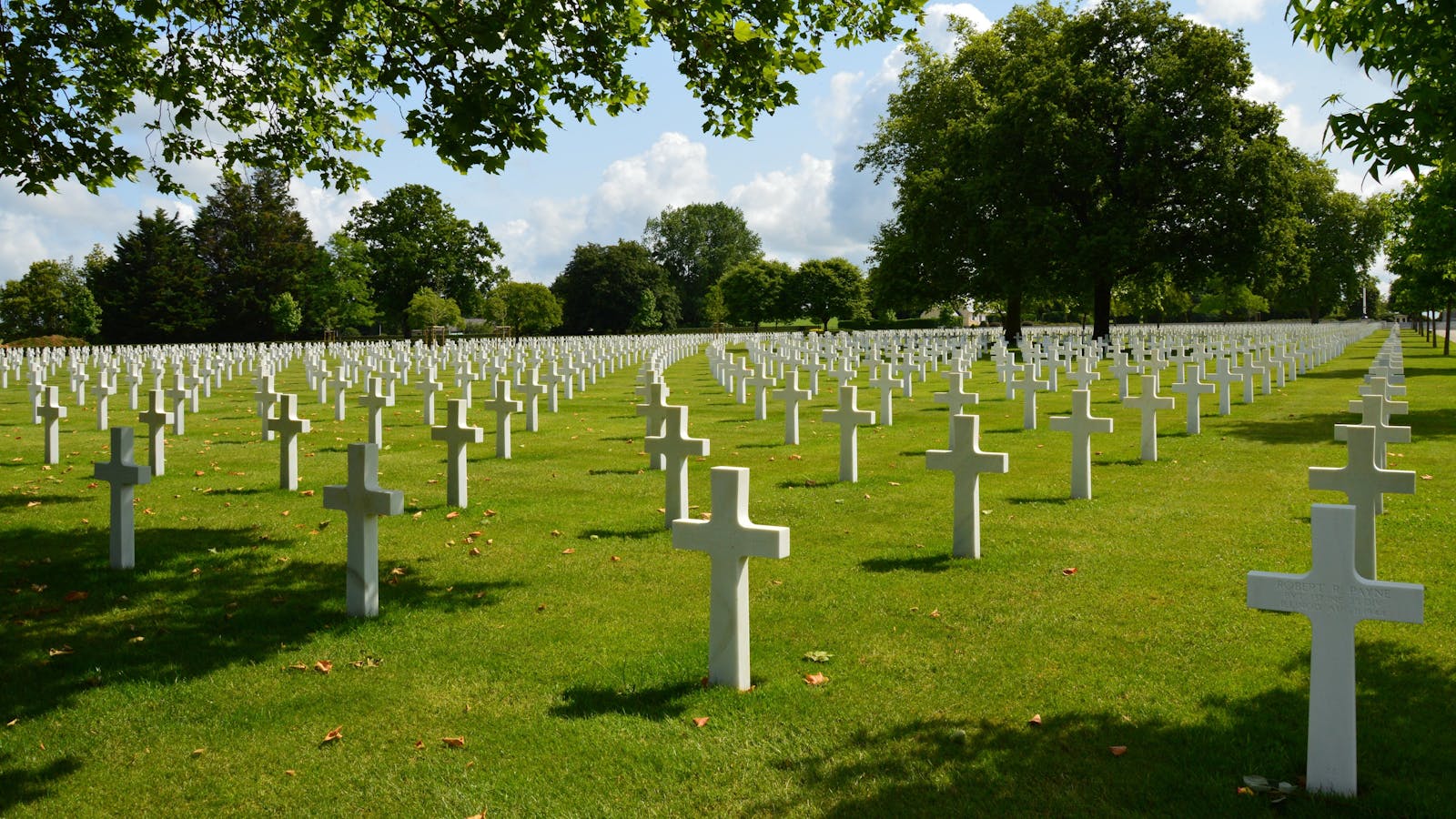
The Normandy American Cemetery at Colleville-sur-Mer is usually the final major stop and the emotional anchor of the day. The cemetery sits on a bluff directly above Omaha Beach, covers 172 acres, and contains 9,388 white marble headstones marking the graves of American service members who died during the Normandy campaign. A reflective pool, a bronze statue called “The Spirit of American Youth Rising from the Waves,” and a small visitor center round out the site. Most tours allow 60 to 90 minutes here. That’s enough to walk the cemetery grounds, visit the chapel, and spend a quiet moment at any specific grave you want to find (the visitor center staff can look up names).
After the cemetery, you re-board the coach for the drive back to Paris. The return drive is three hours and most groups are quiet for the first hour, tired and thoughtful. Your guide usually takes the second half of the drive to answer questions, tell regional stories, and ease the transition back to Paris mode. You’re back at the drop-off point by 8 or 9pm.
Historical Frame: What Actually Happened on June 6, 1944
If you’re going to stand on Omaha Beach, you should know what happened there. Here’s the short version.
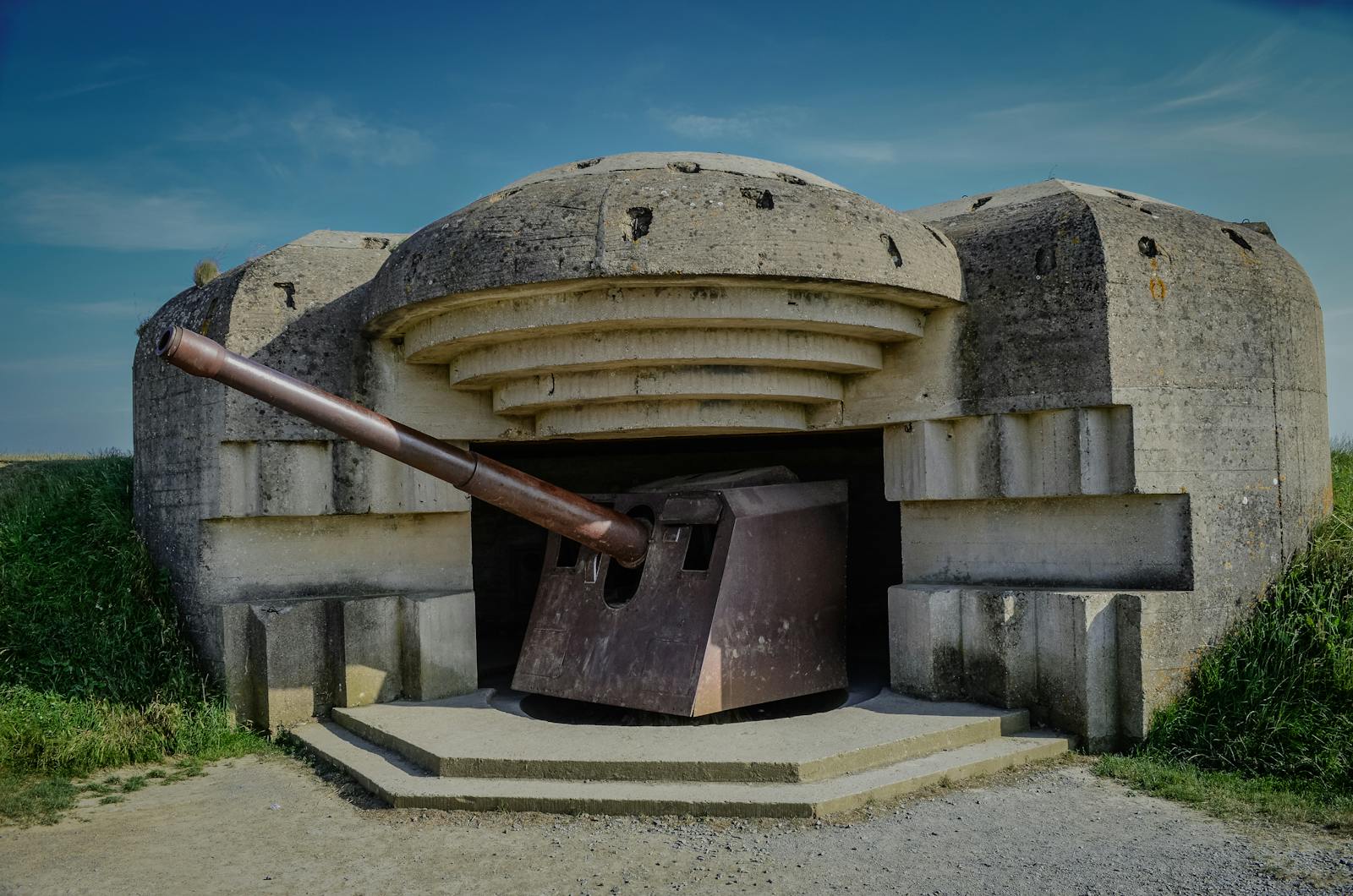
Operation Overlord, the Allied invasion of German-occupied France, began in the early hours of June 6, 1944. It was the largest seaborne invasion in military history: 156,000 American, British, Canadian, and Free French troops landed on five beaches along a 50-mile stretch of Norman coast (Utah, Omaha, Gold, Juno, and Sword) while 23,000 airborne troops parachuted or glider-landed behind German lines. Supporting them were 5,000 ships, 11,000 aircraft, and a year of detailed planning led by General Dwight Eisenhower from a forward headquarters in Portsmouth, England.
The weather delayed the invasion by 24 hours. Original plans called for a June 5 landing. A Royal Air Force meteorologist named James Stagg convinced Eisenhower to push the date to June 6 based on a narrow weather window forecast. If Stagg had been wrong, the entire operation would have failed. He wasn’t.
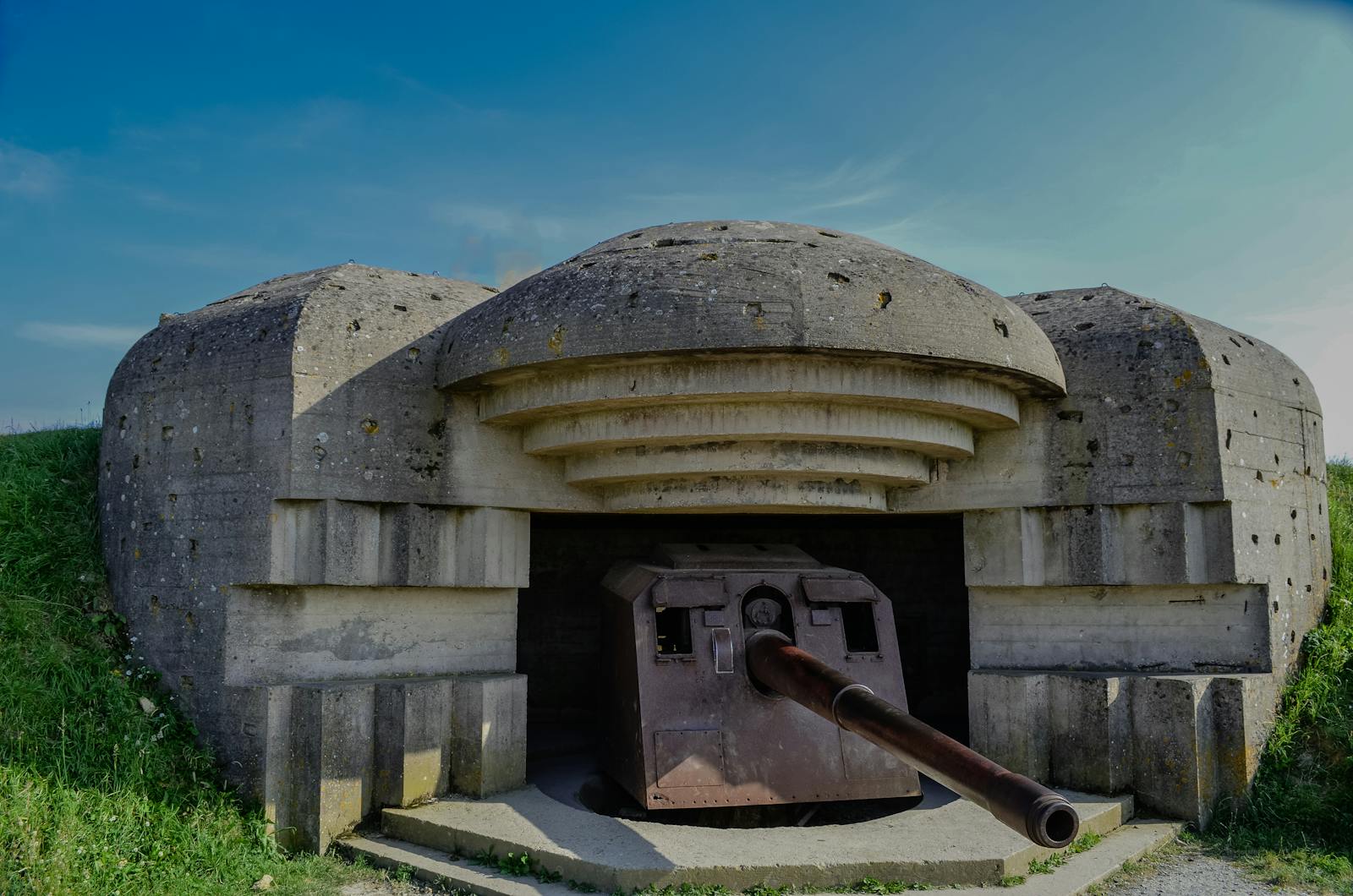
Omaha Beach, the 6-kilometer stretch of sand between Vierville and Sainte-Honorine-des-Pertes, was assigned to the US 1st and 29th Infantry Divisions. It was the bloodiest of the five landings. German defenders in fortified bunkers on the bluffs above the beach had clear fields of fire. Aerial bombing the night before had missed most of the targets. The pre-landing naval bombardment was shortened because of fog. Many of the amphibious tanks that were supposed to provide cover for the first wave sank in rough surf before reaching the beach. First-wave American soldiers stepped out of landing craft into chest-deep water and 200 meters of open sand under concentrated machine gun fire. Casualties in the first two hours were catastrophic.
By late morning, small groups of survivors had scaled the bluffs and begun to neutralize the German positions. By early afternoon, Omaha was secured. Total American casualties at Omaha for June 6 were about 2,400, roughly ten times the other Allied beaches combined. The fighting to expand the beachhead continued for six weeks before the Allies broke out of Normandy and began the sweep across France toward Paris, which was liberated on August 25.
Pointe du Hoc, the cliff between Utah and Omaha, was assigned to the 2nd US Army Rangers under Lieutenant Colonel James Earl Rudder. Their job was to scale the 100-foot cliffs and destroy a battery of German coastal guns that could have fired on both Utah and Omaha beaches. They scaled the cliffs, found the guns had been moved inland, located and destroyed them, then held the point against counter-attack for two days with only 90 of the original 225 Rangers still combat-effective.
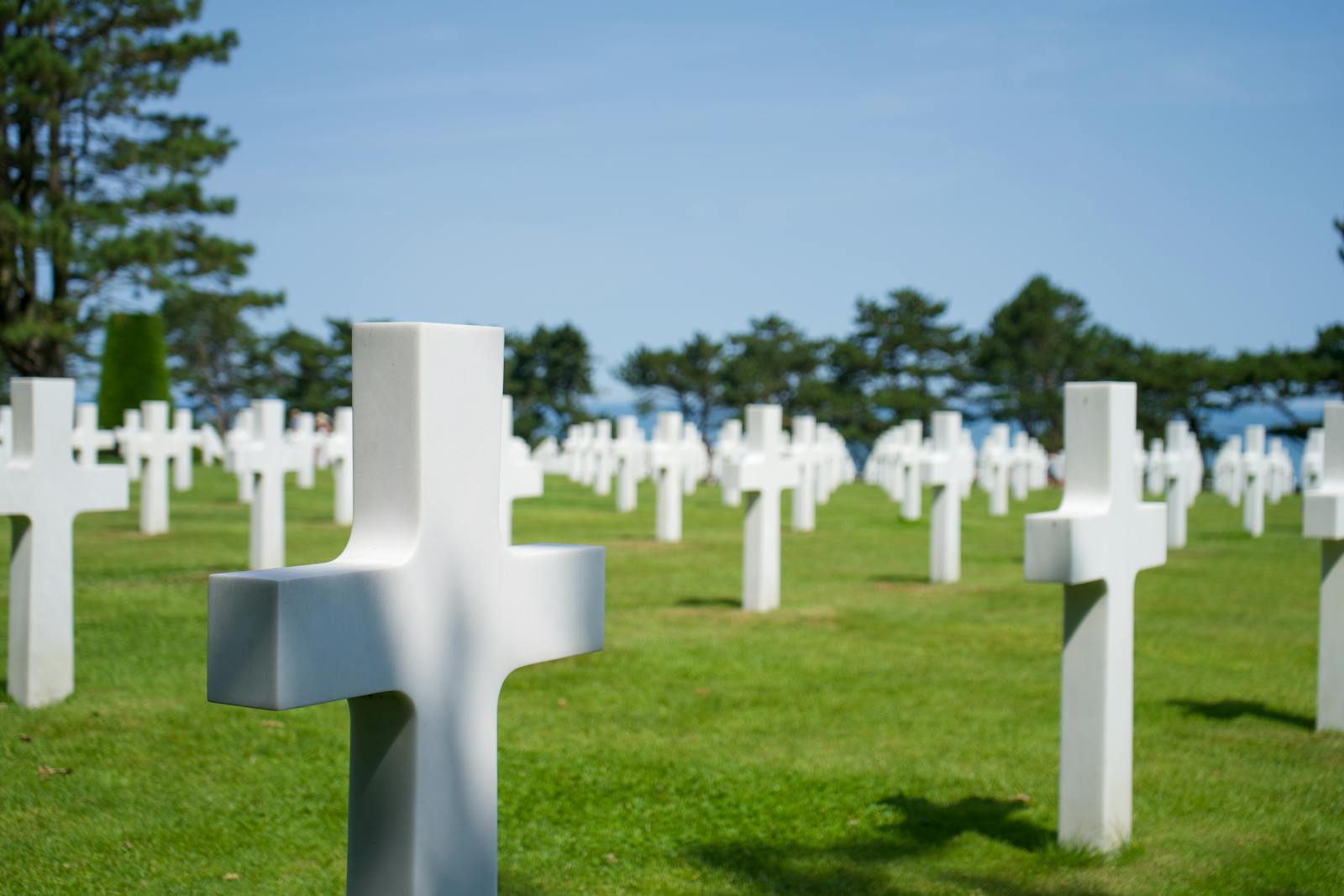
The Normandy American Cemetery at Colleville-sur-Mer was established on June 8, 1944, just two days after the landings. It’s one of 26 permanent American military cemeteries on foreign soil and the only one in France administered by the American Battle Monuments Commission. The 9,388 graves include servicemen from all four D-Day beaches and the subsequent Normandy campaign. Among them are 307 unknown soldiers, 45 pairs of brothers, and one father and son.
Practical Tips for the Day
Start early. Pickup is usually 6:45 to 7:15am. Go to bed before 11 the night before. Set two alarms.
Dress in layers. The coach is warm. The cliffs are cold. The beach is colder. The cemetery is often windy. A base layer, a warm mid-layer, and a windproof shell cover you for everything.
Wear good walking shoes. You’ll walk on sand, wet grass, gravel, and uneven concrete. This is not a day for leather soles or new fashion sneakers.
Bring cash. The cemetery visitor center is free, but some smaller museums on the tour route (Pointe du Hoc visitor center, Utah Beach museum if your itinerary includes it) may charge small entry fees or have gift shops that only take euros.
Pack snacks and water. Your tour includes lunch but you’ll be on the road from before 7am to after 8pm. Having a bottle of water and a granola bar in your bag is a small thing that matters by hour ten.
Charge your phone fully before leaving. Data coverage in rural Normandy is inconsistent. If you want offline maps or photos of specific graves, download the cemetery map from the American Battle Monuments Commission website the night before.
Know what you want to see before you arrive. If you have a specific family member buried at the cemetery, look up the grave location before the trip. You’ll have limited time on-site, and the headstones don’t have last names visible at walking speed. The visitor center staff can help, but only if you know the name.
Respect the cemetery. The American Battle Monuments Commission asks visitors to avoid loud conversation, not to climb on monuments, and not to walk between graves. It’s a working military cemetery, not a museum.
Decide if you want to drink at the cider tasting. The stop usually offers small tastes of cider (about 4% alcohol) and sometimes calvados (40% alcohol). You’ll have been awake since 5am and on the road all day. Moderate accordingly.
The emotional weight is real. Even travelers who aren’t particularly sentimental tend to find the cemetery affecting. Budget some quiet time for yourself in the 20 minutes before you reboard the coach. Don’t try to make small talk immediately after.
Weather-check the night before. Normandy weather changes fast. If you see a storm forecast, bring waterproof gear even if Paris is clear. The beaches will be worse than whatever the Paris forecast shows.
Normandy Alternatives: When a Day Trip Isn’t Enough
If the standard day trip doesn’t match what you want, you have three good alternatives.
Overnight in Bayeux. Take a morning train from Paris Saint-Lazare to Bayeux (2 hours 15 minutes, €30-50 one way depending on time of day), check into a small hotel or B&B in the old town, and book the Bayeux-based tour (option 4 above) for the next day. This gives you a proper Bayeux evening (including the medieval museum in the old town) and a full-length tour without the exhausting round-trip drive. Cost adds about €150-250 for the overnight but pays back in experience quality.
Two-day Normandy trip with your own car. Rent a car at Paris Montparnasse or Gare Saint-Lazare, drive yourself to Bayeux (3 hours), spend two days exploring at your own pace, and drive back. This works best for history-obsessed travelers who want to see secondary sites (Sainte-Mère-Église, Utah Beach, the Caen Memorial Museum, the Juno Beach Canadian museum) that day-trip itineraries skip. Car rental plus fuel plus accommodation runs €250-400 for the weekend.
Private guide with driver. Private D-Day guides in the Normandy region are the gold standard. Figures like Paul Woodadge (WW2TV) and the team at The Pointe du Hoc Tour offer custom itineraries for €800-1,500 per day, typically for groups of 2-6. You get a historian-guide who tailors the day around your specific interests (Band of Brothers sites, a relative’s unit, a specific battle), a private vehicle, and no other guests to accommodate. This is the right choice for serious WW2 travelers or anyone with a personal family connection to the campaign.
More Paris Guides Worth Reading
A Normandy day trip is exhausting, and most travelers pair it with a lighter Paris day on either side. Our Paris museum guides work well as a “next day” bookend: the Paris Louvre Museum tickets guide covers the four best ways to see the Mona Lisa without wasting hours in security queues, and the Musée d’Orsay tickets guide unpacks why the old railway station has become Paris’s best Impressionist collection. For something on a completely different emotional register after the cemetery day, our guide to Paris Eiffel Tower tickets explains the four best ticket types and how to avoid the 90-minute security queue problem.
The Arc de Triomphe rooftop guide is a good “recovery morning” option: a short walk, an elevator or 284-step climb, and a 30-minute visit that gives you a view of the whole Champs-Élysées before you eat lunch. If you want to get on the water, the Paris Seine River sightseeing cruises guide covers the four best one-hour boat options, most of which depart near the Eiffel Tower. For a longer history day that pairs well with a Normandy trip, the Versailles day trip from Paris guide walks through the best ways to hit both the palace and the gardens without burning out.

Final Word
A Normandy day trip from Paris is the most physically demanding and emotionally heaviest Paris excursion on most itineraries, and the reward for doing it is that you come home knowing something about the Second World War you didn’t know before. The right ticket is the one that matches your budget and your tolerance for group size: the $120 coach tour is the correct default for most travelers, the $320 small-group option is worth it if you have the budget and want more intimate pacing, and the $169 Bayeux-based tour is the smartest choice for anyone who can add one night to their itinerary. Pick, book with free cancellation, bring layers, eat a real breakfast, and go. The beach will do the rest.
See Also — Latest Paris & France Guides: Seine dinner cruises guide, French Riviera day tours guide, Paris food tours guide, Palais Garnier tickets guide, Mont Saint-Michel day trip guide, Paris Catacombs tickets guide, Sainte-Chapelle tickets guide, Montmartre walking tours guide, Giverny Monet day trip guide, Paris hop-on hop-off bus tours guide, Loire Valley castles day trip guide, Moulin Rouge cabaret shows guide, Saint-Emilion and Bordeaux wine tours guide, Disneyland Paris tickets guide, Paris bike tours guide.