
Paris is the city that convinced the world baking bread and making cheese were forms of art worth protecting by law. UNESCO added the “gastronomic meal of the French” to its Intangible Cultural Heritage list in 2010, which is the sort of thing only happens to a country that takes its food seriously enough to argue about butter ratios in public. For the first-time visitor, this creates a problem: there is simply too much good food in too many neighborhoods, and the best spots rarely have English menus, lines that look inviting, or any obvious signal that they’re better than the tourist trap three doors down. A guided food tour solves that problem in three hours by putting a local in front of you who actually knows which boulangerie wins the “best baguette in Paris” award this year and which fromager is worth the detour into the 11th arrondissement.
The four tours below cover the full range of what’s available: the established market leader that’s been running Paris food walks since 2014, the flagship Montmartre gourmet walk that adds wine and cheese pairings to the climb up the Butte, the Devour-brand full-experience tour that leans heavily into local history, and a Le Marais specialist that spends its three and a half hours on the Right Bank’s oldest neighborhood. Pick based on which Paris you want to meet over food: the classical Left Bank, the artistic Montmartre, or the medieval Marais.
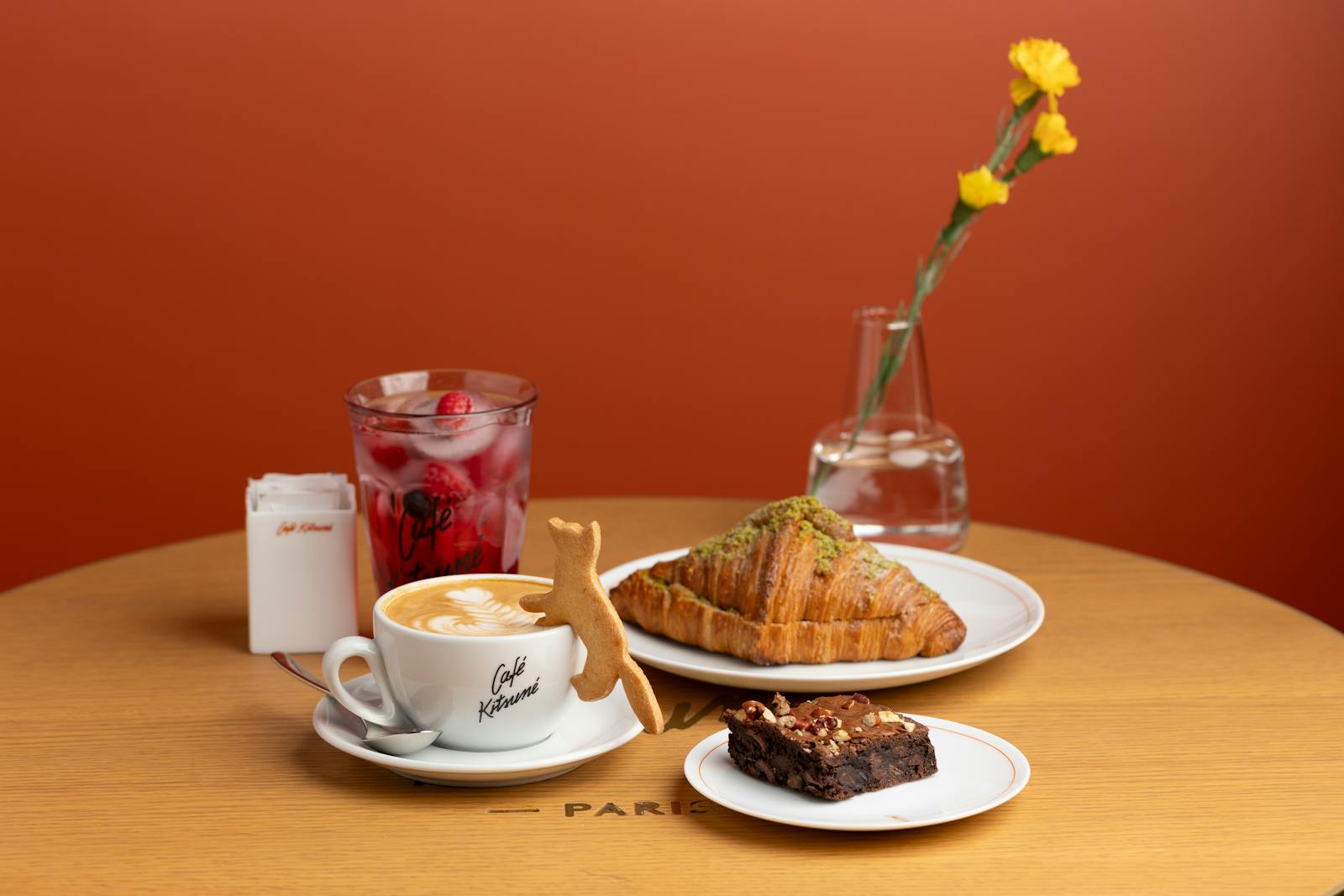
- Quick Picks
- The Four Best Paris Food Tours
- 1. Paris Walking Food Tour With Secret Food Tours
- 2. Montmartre Hill French Gourmet Food and Wine Tasting Walking Tour
- 3. Devour Paris Ultimate Food Tour
- 4. Paris Le Marais Food Tour With 10+ Tastings, Cheese, Wine & More
- What an Actual Paris Food Tour Looks Like
- Which Neighborhood Should You Pick?
- A Short History of How Paris Became the Food Capital
- What You’ll Actually Eat
- Practical Tips Before You Book
- Alternatives If None of These Are Right
- More Paris and France Guides
- Which Tour Should You Actually Book?
- Final Word
Quick Picks
Best overall Paris food tour: Secret Food Tours Paris (Tour #1 below). It’s the one with 4,754 reviews at a 5.0 average, which means more people have taken it than any other food tour in Paris and somehow nobody has ever given it less than five stars in bulk. At $102.79 for three and a half hours including actual meal-sized portions, it’s also one of the better value options. If you only book one food tour on your trip and you don’t have a specific neighborhood preference, this is the answer.
Best for Montmartre and first-timers: Montmartre Hill French Gourmet Food and Wine Tasting Walking Tour (Tour #2). You’re going to climb the Butte Montmartre at some point anyway, so you might as well do it with food and wine stops built into the walk. The pairings include sit-down tastings rather than grab-and-go snacks, which changes the whole feel of the experience. $145.12 for three hours, 2,588 reviews, 5.0 average.
Best for Le Marais food culture: Paris Le Marais Food Tour With 10+ Tastings, Cheese, Wine & More (Tour #4). Ten-plus tastings is not marketing inflation — they actually count out the stops — and at $102.79 matching the flagship Secret Food Tour price, you’re getting the same operator’s Marais-specific product at the same price point. Good for travelers who already know they want to explore the Jewish quarter, Place des Vosges, and the Rue des Rosiers falafel block.
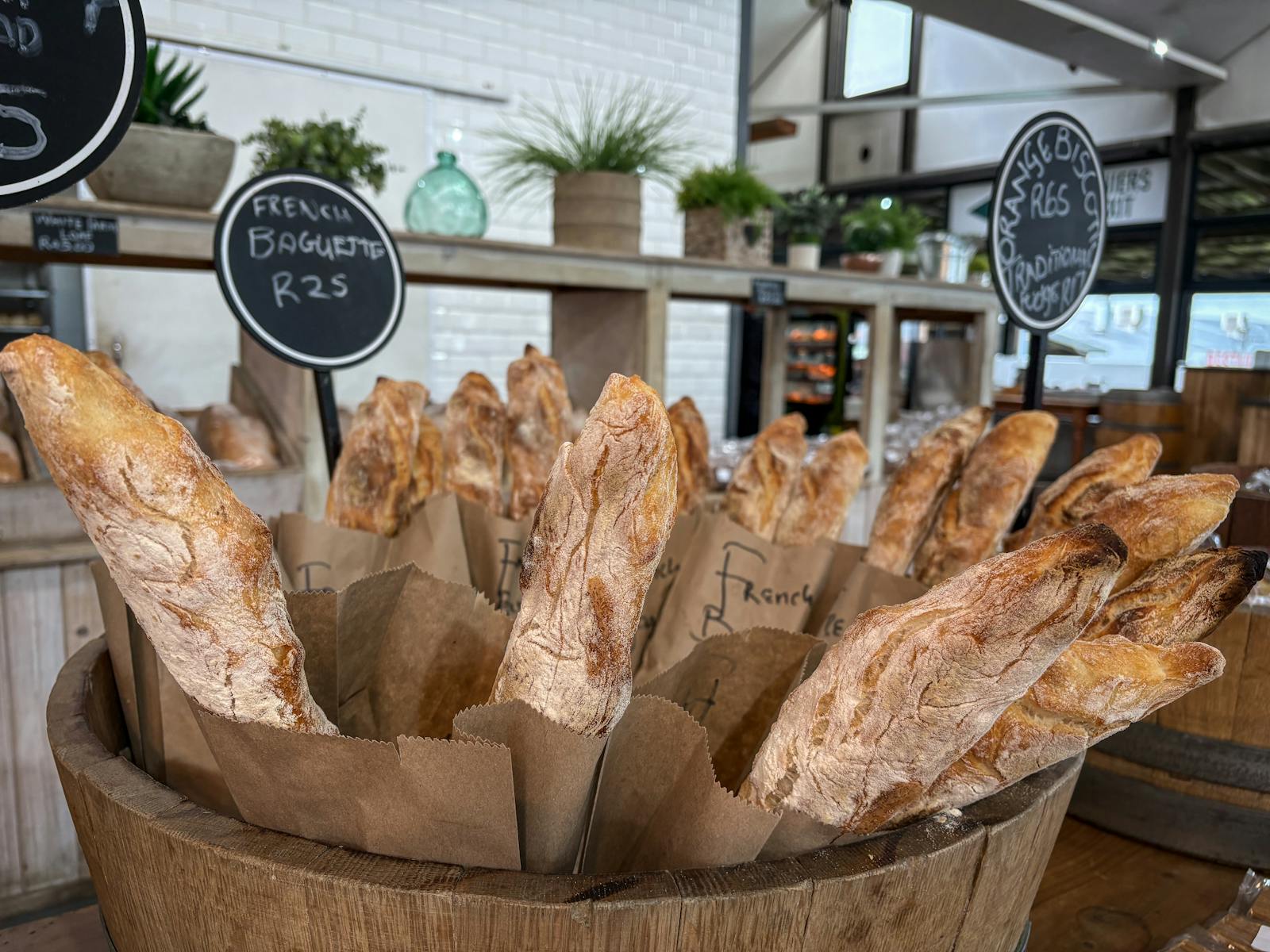
The Four Best Paris Food Tours
1. Paris Walking Food Tour With Secret Food Tours
The flagship Paris product from Secret Food Tours, the London-based operator that’s now running food walks in 60+ cities but started in Paris. Three and a half hours, small groups (usually 10-12 people), covers the Saint-Germain and Latin Quarter area on the Left Bank with around six to eight stops hitting a range of classic French categories: boulangerie, fromagerie, pâtisserie, charcuterie, a sit-down wine and cheese pairing in the middle, and a final stop that varies by guide. The “secret” branding refers to a single hidden tasting at each tour that’s kept off the website, which guides like to tease for the first hour. $102.79 per person, 4,754 reviews at 5.0 stars — the most reviewed food tour in Paris on Viator by a wide margin.
What makes this one work is the guide training. Secret Food Tours hires only people who actually live in the neighborhood they’re touring, and most of the Paris guides are French nationals rather than expats, which means you get genuine opinions about where the best croissant in the 6th arrondissement comes from rather than polite tourist consensus. The food portions are also honest — by the time you finish the wine and cheese pairing, you will not need dinner.
Paris Walking Food Tour With Secret Food Tours
Rating: 5.0/5 (4,754 reviews) | Duration: 3 hours 30 minutes | Price: $102.79 per person
Small-group walking food tour of Saint-Germain and the Latin Quarter with six to eight tastings including bakery, cheese shop, pastry, charcuterie, and a sit-down wine and cheese pairing.
Recent guest feedback captures the consistency well. Hannah D. called it “one of our Parisian highlights” and singled out guide Matis as “incredibly knowledgeable, kind, and the most French person we met on our trip.” Tracy O. described her guide Yoyo as “exceptional” for historical context on Parisian food culture beyond just the tastings themselves.
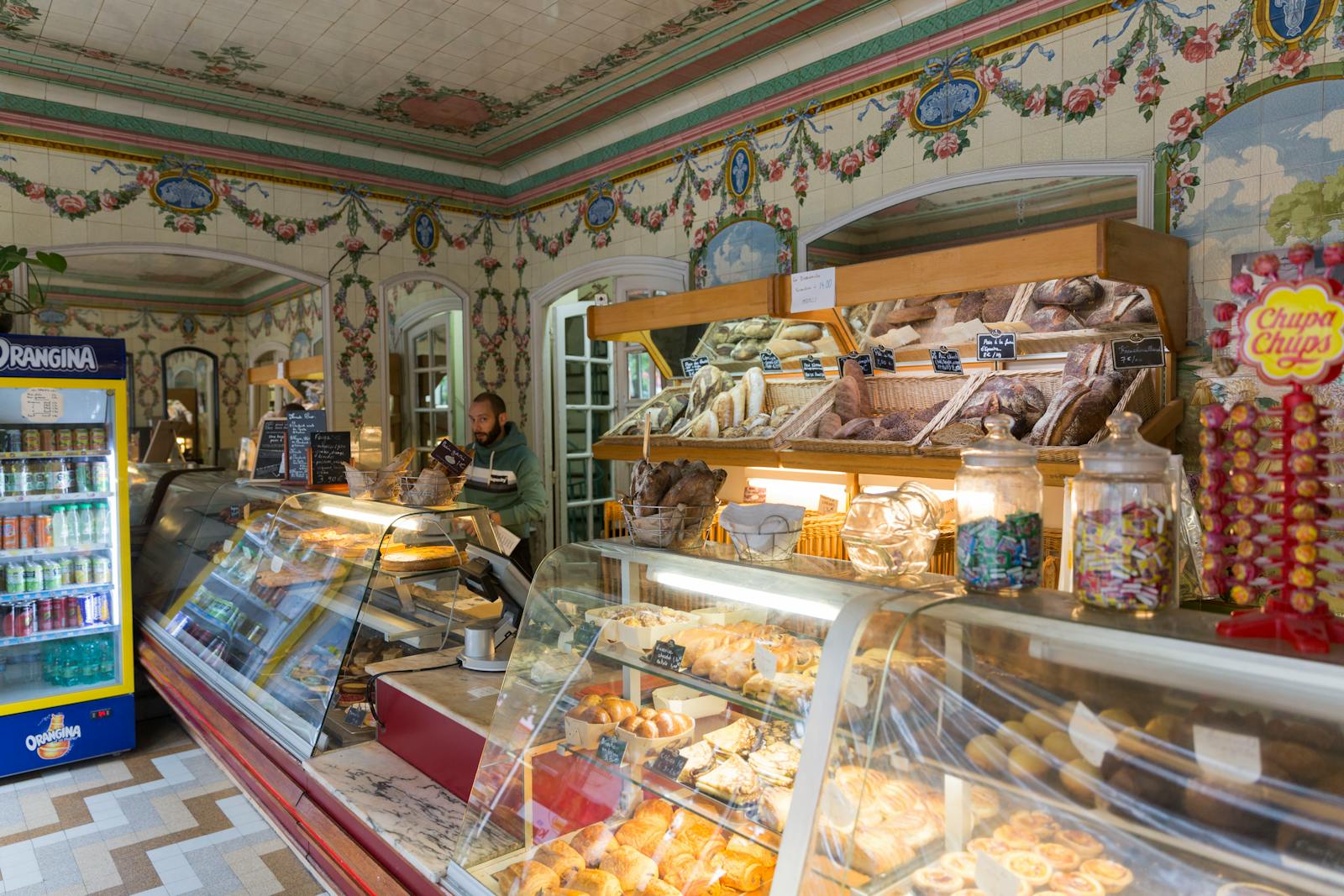
Book this one if you want the most-tested product in the market, you’re staying on the Left Bank, and you want a guide who takes the food history as seriously as the food itself. Skip it if you’re specifically after Montmartre or the Marais — the other three tours below serve those neighborhoods better.
2. Montmartre Hill French Gourmet Food and Wine Tasting Walking Tour
This is the Montmartre food tour with the most reviews and the best ratings — 2,588 reviews at 5.0 stars — and it does something the Secret Food Tours product doesn’t: it builds a sit-down wine and cheese pairing into the middle of the walk, which turns the tour from a series of grab-and-go tastings into an actual small meal. The route starts near Pigalle or the Abbesses metro, climbs gradually through the Montmartre village to the vineyard and the Sacré-Cœur esplanade, and finishes at a brasserie with a view over the rooftops. Three to three and a half hours, $145.12 per person — a $42 premium over the Secret Food Tours product, justified mainly by the longer sit-down pairing and the Montmartre-specific routing.
The guide quality is the other major differentiator. Montmartre has a strong community of long-term residents (artists, writers, shop owners whose families have been on the Butte for three generations), and this tour’s guides tend to draw from that pool. Recent reviews from Anne N. described guide Julie as someone who “enjoys the subject, loves to share expertise with others, and likes to meet new people,” with a deep handle on both neighborhood history and the specific producers. Corrie K., on a tour led by a guide named Marie, mentioned running into Marie’s actual neighbors and friends during the walk — the sort of thing you can’t fake.
Montmartre Hill French Gourmet Food and Wine Tasting Walking Tour
Rating: 5.0/5 (2,588 reviews) | Duration: 3 to 3.5 hours | Price: $145.12 per person
Gourmet walking tour climbing Montmartre with savory and sweet food tastings, a sit-down wine and cheese pairing, and a finish at a brasserie overlooking Paris.
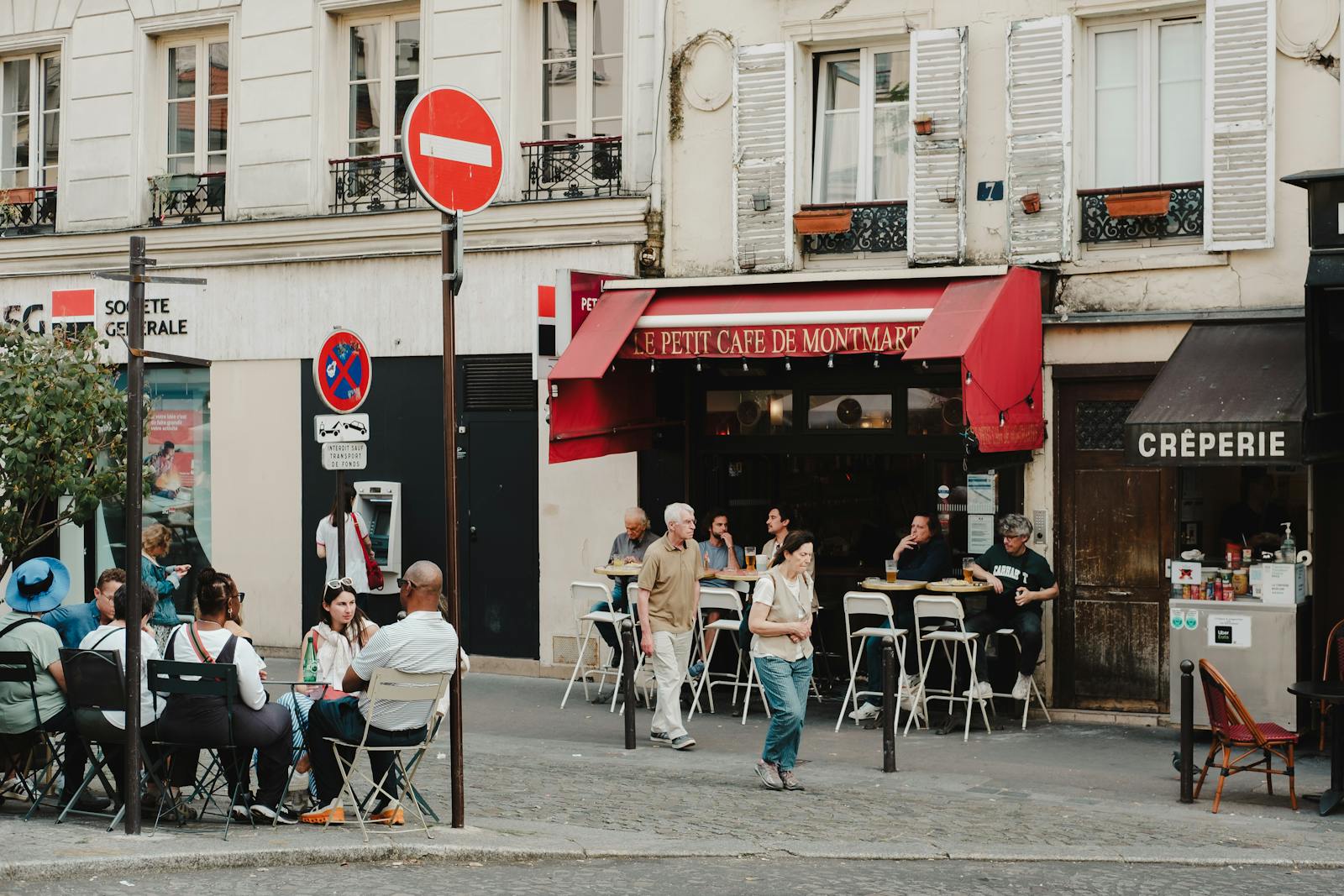
The one recurring criticism worth flagging: Holly B. called it “cute but overpriced” and noted that some of the individual tastings were small relative to the total price. That’s a fair observation — if you do the math on the number of bites versus $145, you’re paying for the guide, the routing, and the sit-down wine session more than the raw food quantity. If you want maximum calories per dollar, Tour #1 or Tour #4 are better. If you want a curated Montmartre experience with a real guide and a proper mid-walk pairing, this is the right choice.
Book this one if you’re already planning to go up Montmartre anyway (and you probably are), you want wine and cheese as a sit-down course rather than a walking snack, and you’re happy to pay a modest premium for the neighborhood-specific routing.
3. Devour Paris Ultimate Food Tour
Devour Tours runs food walks in about a dozen European cities, with their Spanish operations being the original and largest, but the Paris product has built a strong reputation of its own — 2,087 reviews at 5.0 stars, $143.91 for three and a half hours. The structural difference from the other tours on this list is that Devour leans harder into history and cultural context: guides spend more time explaining why a particular dish exists, how the neighborhood shaped its food culture, and how French gastronomy evolved from medieval convent kitchens to the modern bistro. The tastings are solid, but you’re also buying a three-and-a-half-hour lecture from someone who knows what they’re talking about.
The route varies by date and guide but typically covers one of Paris’s historic food districts — often Saint-Germain or a stretch of the Right Bank near Les Halles — with six to eight stops. Portions are generous (Iain M. described it as “quality, quantity and history” in one recent write-up), and the tour tends to attract travelers who want more than just the food itself. Michael D. specifically listed “croissants, chocolate, macarons, pastrami sandwich, onion soup, wine and cheese” as the menu on his tour — that’s a full spread by any measure.
Devour Paris Ultimate Food Tour
Rating: 5.0/5 (2,087 reviews) | Duration: 3 hours 30 minutes | Price: $143.91 per person
History-focused walking food tour through a historic Paris food district with six to eight tastings and deep background on French gastronomic culture.
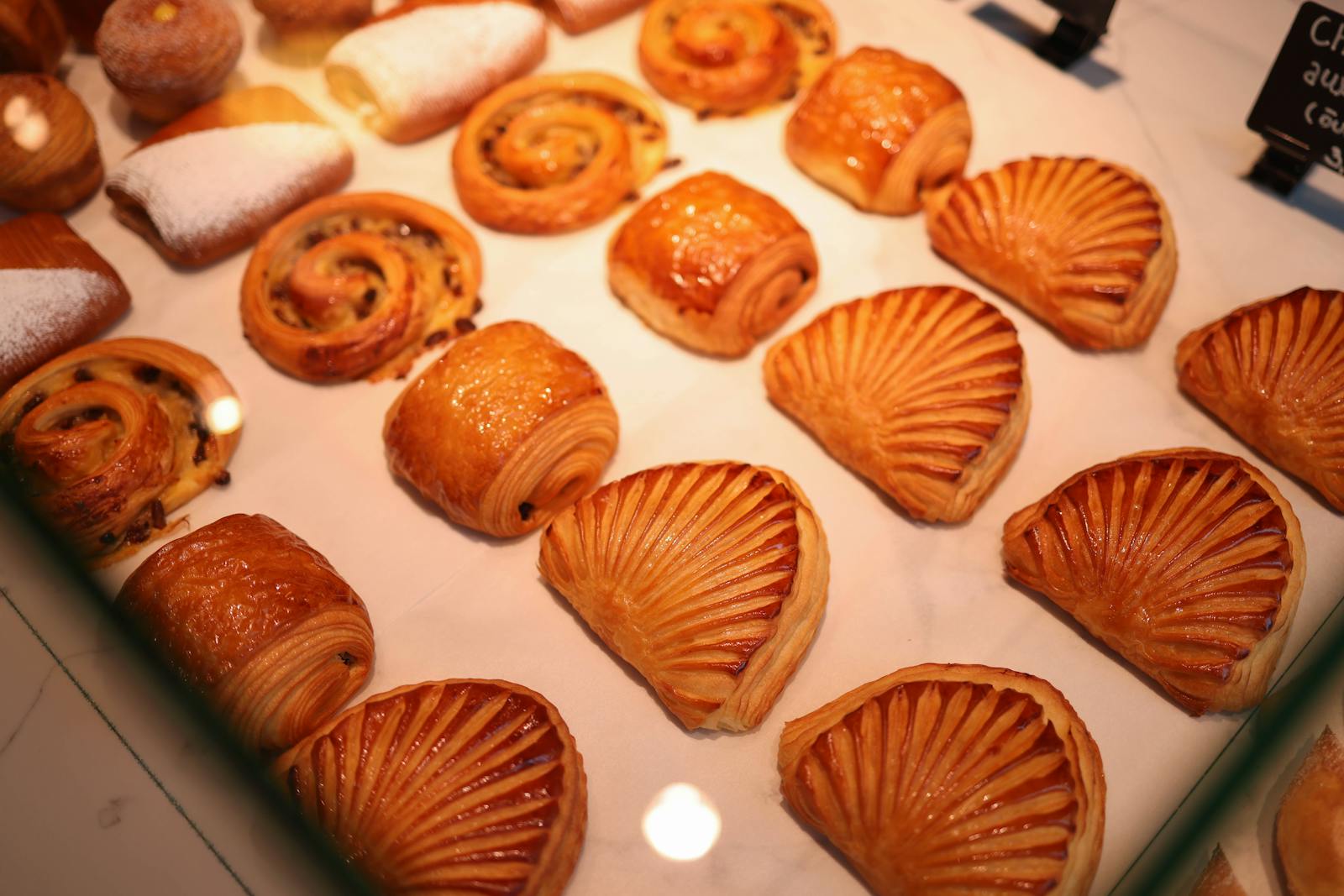
Guide reputation is strong across the board. Susan J. specifically called out her guide Dave for tying the food context to the history of each location. Whitney T. described her guide Juan as someone who clearly “helps build and maintain the community” in the neighborhood — again, the kind of local embedding that distinguishes good food tours from generic food walks.
Book this one if you care about the historical and cultural context as much as the food, you want generous portions, and you’re comfortable paying roughly the same as the Montmartre tour for a different stylistic approach. Skip it if you want Montmartre specifically (Tour #2) or the Marais (Tour #4).
4. Paris Le Marais Food Tour With 10+ Tastings, Cheese, Wine & More
The Le Marais-specific product from Secret Food Tours, same operator as Tour #1 but focused entirely on the oldest surviving neighborhood in Paris — the one Baron Haussmann’s 19th-century demolition program somehow spared, leaving a dense medieval street grid where falafel shops, Jewish bakeries, wine bars, and fromageries now coexist in three-block clusters. Three and a half hours, ten-plus tastings (counted honestly), $102.79 per person — same price as Tour #1 because it’s the same operator’s Marais variant. 985 reviews at 5.0 stars.
The Marais is the ideal neighborhood for this kind of walking food tour precisely because everything is so close together. You can hit a boulangerie, a fromager, a chocolatier, a charcuterie, a falafel stand on the Rue des Rosiers, and a wine bar without walking more than fifteen minutes total between stops. The tour takes advantage of that density with more stops than any of the other tours on this list — ten-plus versus six to eight — which means smaller individual portions but more variety overall.
Paris Le Marais Food Tour With 10+ Tastings, Cheese, Wine & More
Rating: 5.0/5 (985 reviews) | Duration: 3 hours 30 minutes | Price: $102.79 per person
Walking food tour of Le Marais with ten-plus stops covering bakeries, cheese shops, charcuterie, the Rue des Rosiers Jewish quarter, and a wine and cheese sit-down.
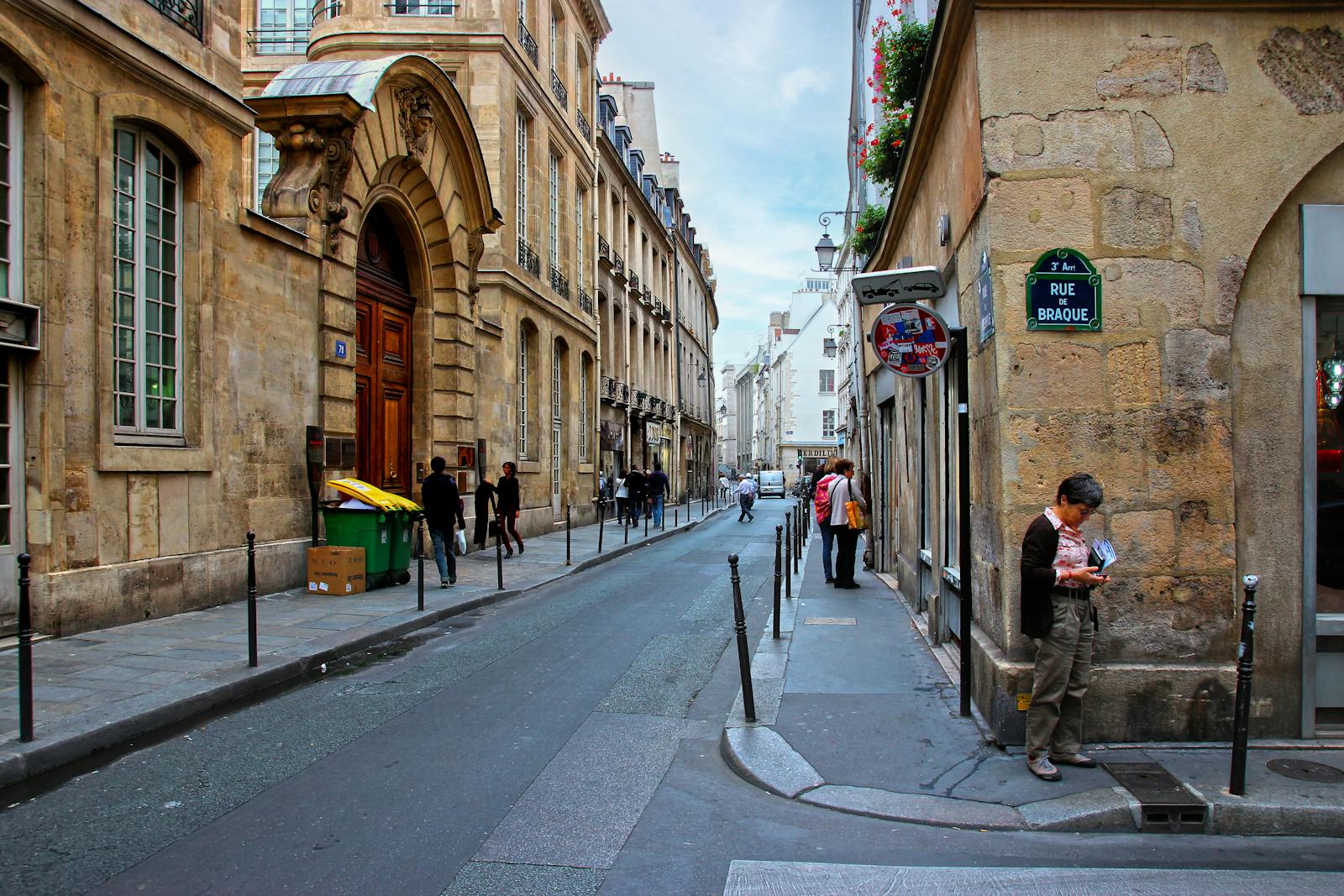
Recent guest feedback is consistent on guide quality. Harida S. described Gabriel as “informative, full of patience and attention” over a February 2026 tour. Patricia V. called guide Etienne “the best tour guide” and emphasized both his food knowledge and his handle on Marais history. LaRonda C., also from February 2026, specifically praised the combination of food quality and French historical context, which is exactly what the Marais as a neighborhood is built to deliver.
Book this one if you want the highest tasting count of any Paris food tour, you’re specifically interested in the Marais or the Jewish quarter, and you appreciate that Secret Food Tours is the same operator running both Tour #1 and this one (so the quality bar is the same). Skip it only if you want a different neighborhood.
What an Actual Paris Food Tour Looks Like
If you’ve never done a guided food tour before, the format surprises people. These are not sit-down multi-course meals. They are not all-you-can-eat crawls. They are structured walking tours where the guide leads a small group (typically 8-12 people) between five and ten specialized food shops over three to three and a half hours, with a tasting at each stop. The tastings are real portions — a full croissant at the boulangerie, a full macaron at the pâtissier, a generous slice of cheese with bread and wine at the fromager — not the thumb-sized samples you get at a farmer’s market. By the end of the tour, you will have eaten the equivalent of a full lunch plus dessert, which is why most Paris food tours schedule either late-morning (around 10:30 or 11:00) or mid-afternoon (around 3:00 or 4:00) so you can book dinner later.
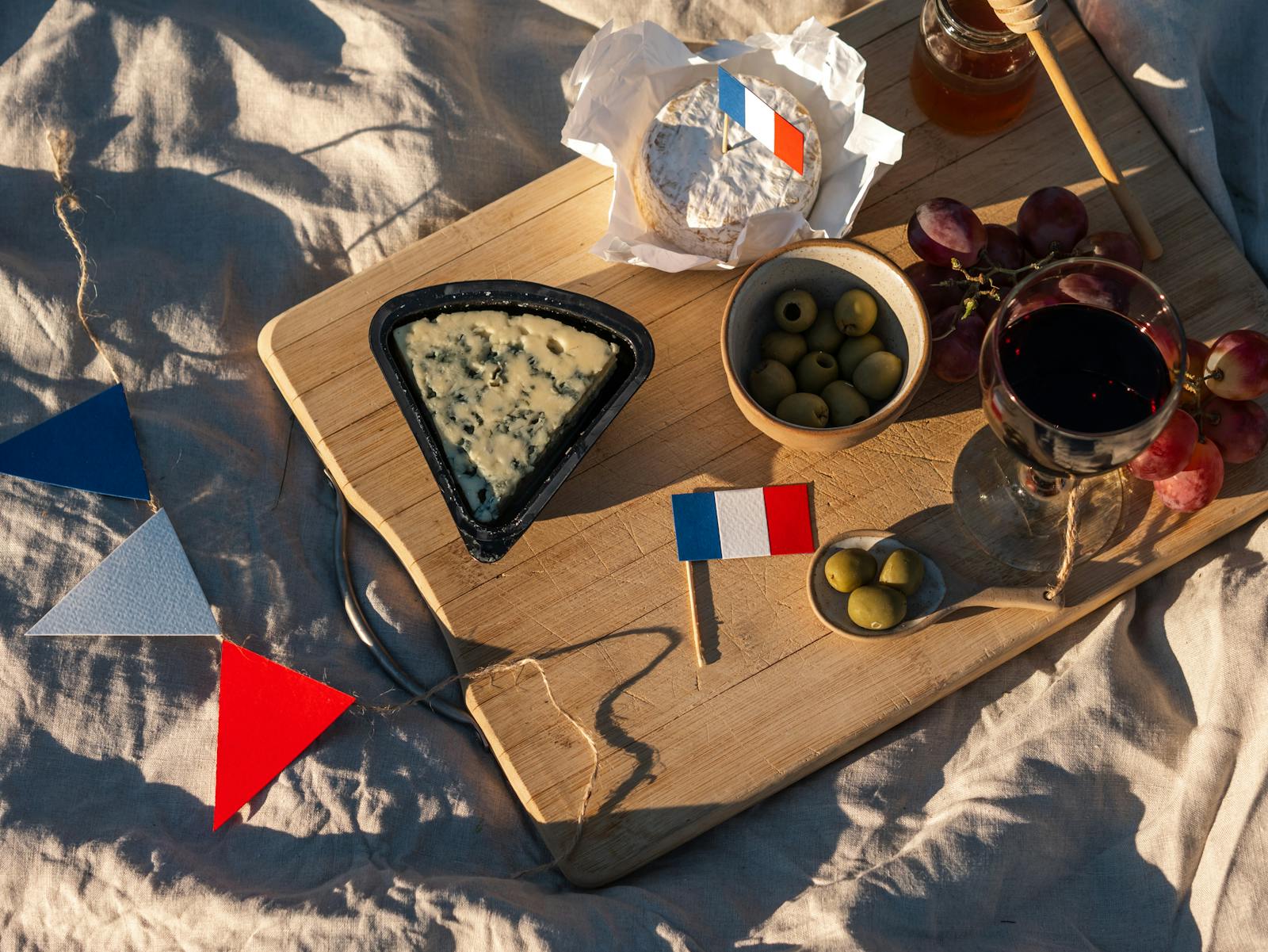
The best tours include at least one sit-down component, usually a wine and cheese pairing in the middle, which gives the guide time to explain the context of what you’re eating and gives your feet a break from the cobblestones. Guides are almost always local residents of the specific neighborhood — this matters more than you’d think, because Paris is a city where the difference between a great boulangerie and a mediocre one is a block and a half, and only someone who lives there will reliably steer you to the right one.
Which Neighborhood Should You Pick?
Paris has maybe ten neighborhoods that support a legitimate food tour, but the four tours above cover the three that matter most for a first-time visitor.
Saint-Germain and the Latin Quarter (Tour #1) is the Left Bank, the historic home of the intellectual café culture — Les Deux Magots, Café de Flore, Brasserie Lipp — and the area where most of the classical French culinary institutions are rooted. It’s also dense with boulangeries, fromageries, and pâtisseries that have been in business for three or four generations. If you want the most “timeless Paris” food experience, this is the neighborhood.
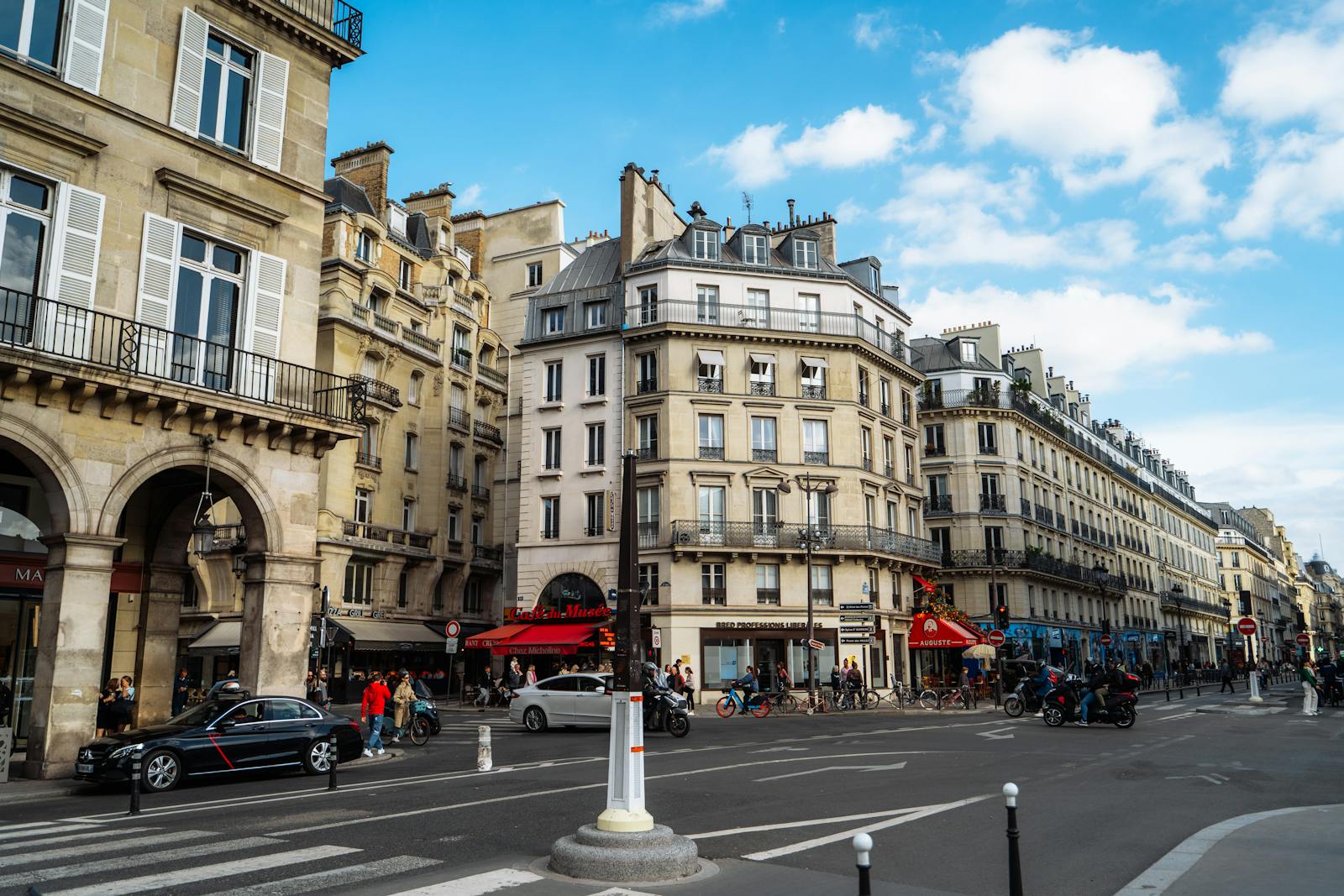
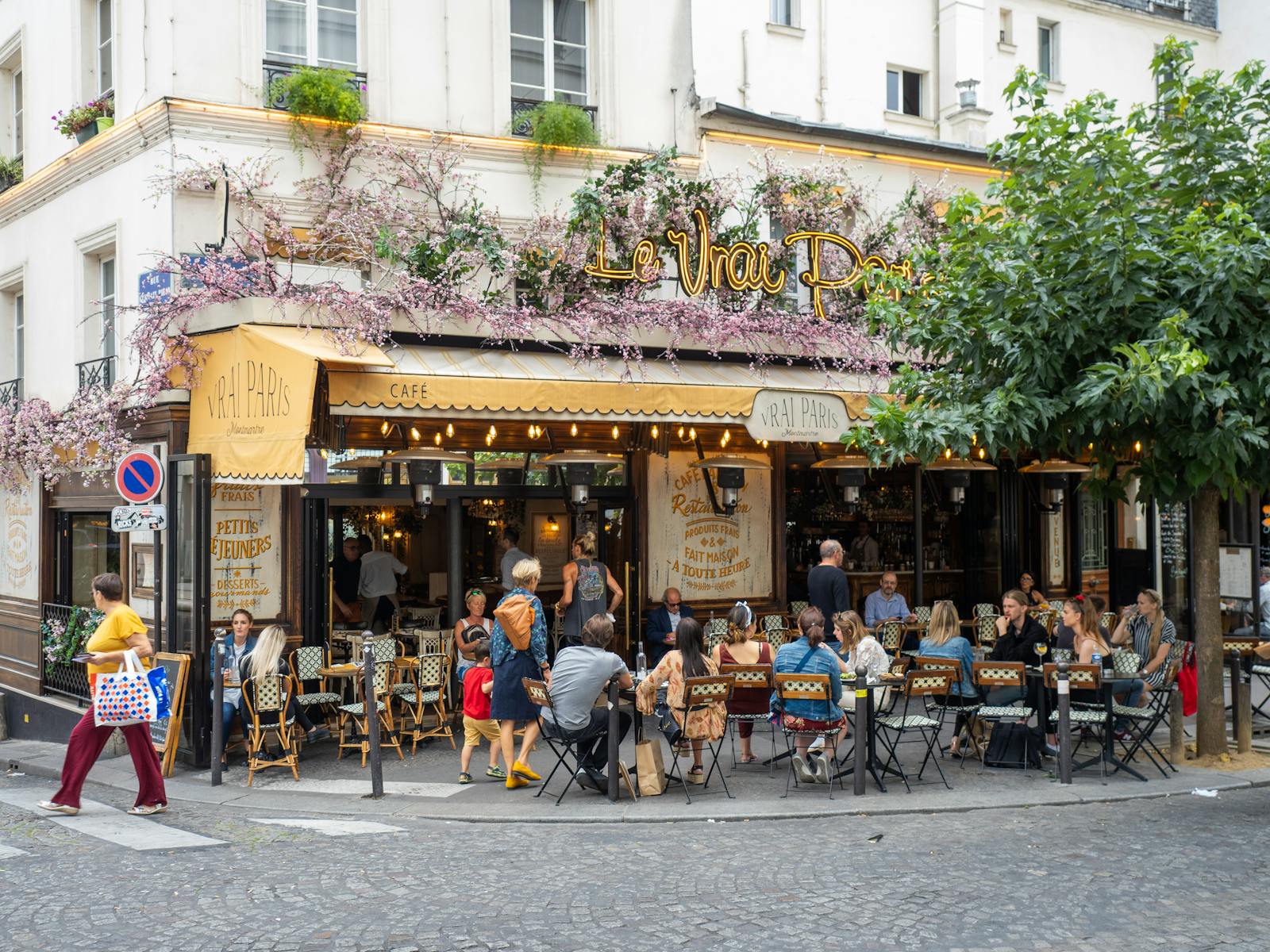
Montmartre (Tour #2) is the steep village on the Butte in the 18th arrondissement, known for Sacré-Cœur, the Moulin Rouge at its base, and a bohemian food culture that reflects its history as an independent village absorbed into Paris only in 1860. The food here is less grand brasserie and more neighborhood bistro, with a strong cluster of small producers and wine bars. The vineyard on the Butte (Clos Montmartre) still produces an annual harvest. Food tours here tend to feel more informal and village-like than the Left Bank tours.
Le Marais (Tour #4) is the medieval Right Bank district that covers the 3rd and 4th arrondissements, the only major Paris neighborhood that escaped Haussmann’s 19th-century demolition program, which means the street grid is still essentially from the 1500s. Food culture here is layered: classical French bakeries and fromageries coexist with an old Jewish quarter around the Rue des Rosiers (famous for L’As du Fallafel, Sacha Finkelsztajn, and Chez Marianne), plus modern bistros, wine bars, and chocolate shops. The density of good food per square meter is probably the highest in the city.
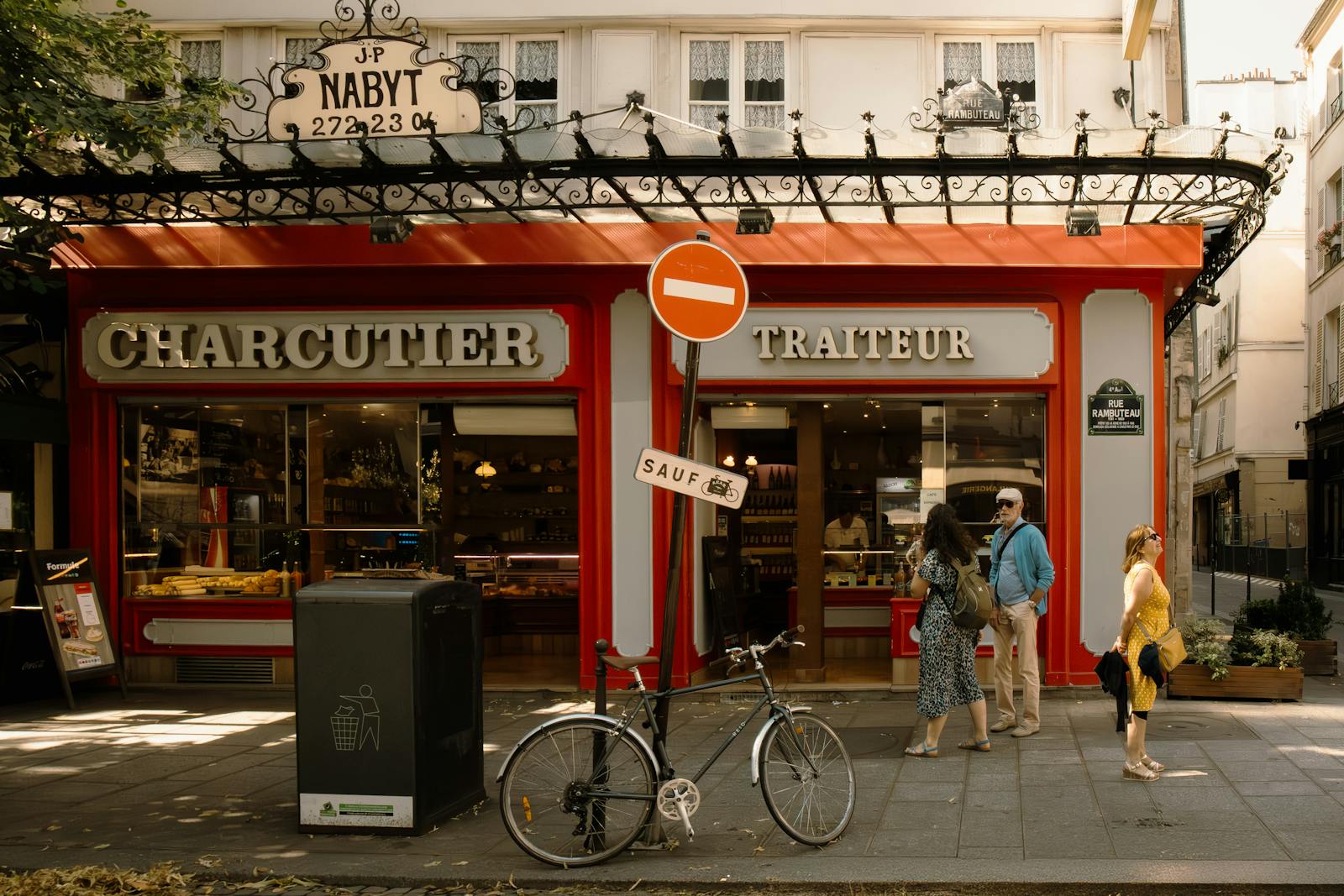
The fourth tour on our list, Devour Paris (Tour #3), rotates between several of these neighborhoods depending on the date and guide, so the choice between Tour #3 and the others is less about geography and more about the style of the tour itself.
A Short History of How Paris Became the Food Capital
The specific claim that Paris invented modern restaurant culture is defensible: the word “restaurant” in its modern sense — an hotel with a printed menu where individual diners order from a list and pay per dish — was first used in Paris in 1765 by a bouillon vendor named Boulanger. Before that, you ate at an inn where you got whatever the innkeeper was serving that day, at a set hour, at a communal table. Boulanger’s innovation was revolutionary at the time, and it spread rapidly through Paris in the decades before the Revolution.
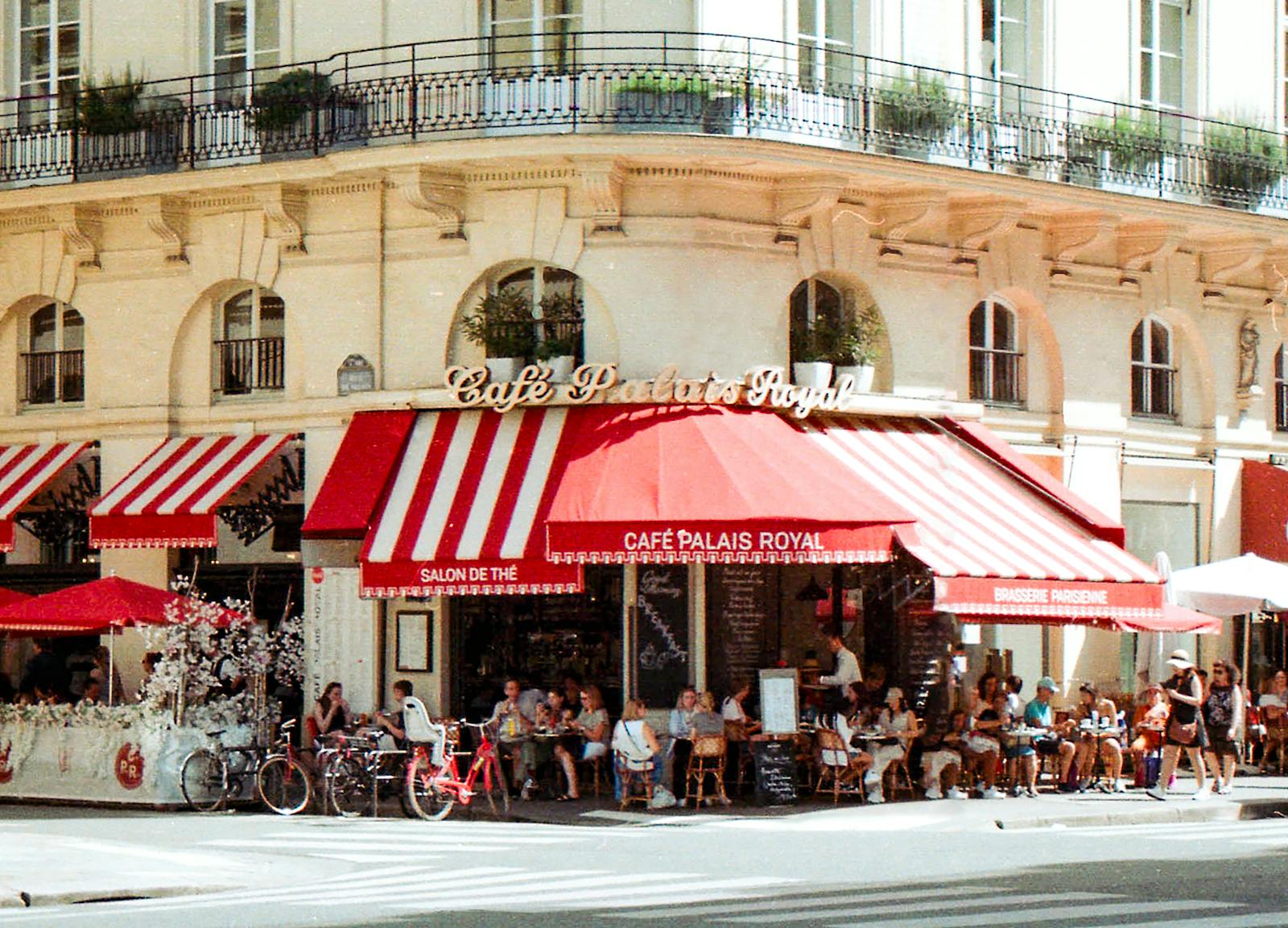
The Revolution itself accelerated the process. When the aristocracy fled or was guillotined after 1789, their private chefs suddenly needed work, and many of them opened restaurants in the newly unemployed former noble quarters. Within a generation, Paris had hundreds of restaurants serving food of a quality that had previously only been available in private aristocratic kitchens, and the city became the effective capital of professional cuisine for Europe. By the mid-19th century, every serious cook in the Western world either trained in Paris or trained under someone who did.
The 20th century consolidated this. The Michelin Guide, first published in 1900 as a marketing tool for the Michelin tire company, started awarding stars to restaurants in 1926 and three-star ratings in 1931, cementing Paris as the benchmark city for fine dining. More importantly for your food tour: the same period saw the emergence of the modern Parisian neighborhood food ecosystem — the boulangerie on every block, the specialized fromager, the local pâtissier — that still exists today. When your food tour guide takes you into a bakery that claims to make the best baguette in the 6th arrondissement, they’re drawing on a local-specialist tradition that’s been continuously running for about 150 years.
What You’ll Actually Eat
The exact tasting list varies by tour and by guide, but a solid Paris food tour will hit most of the classical French food categories in three and a half hours. Expect to eat the following, in some combination:
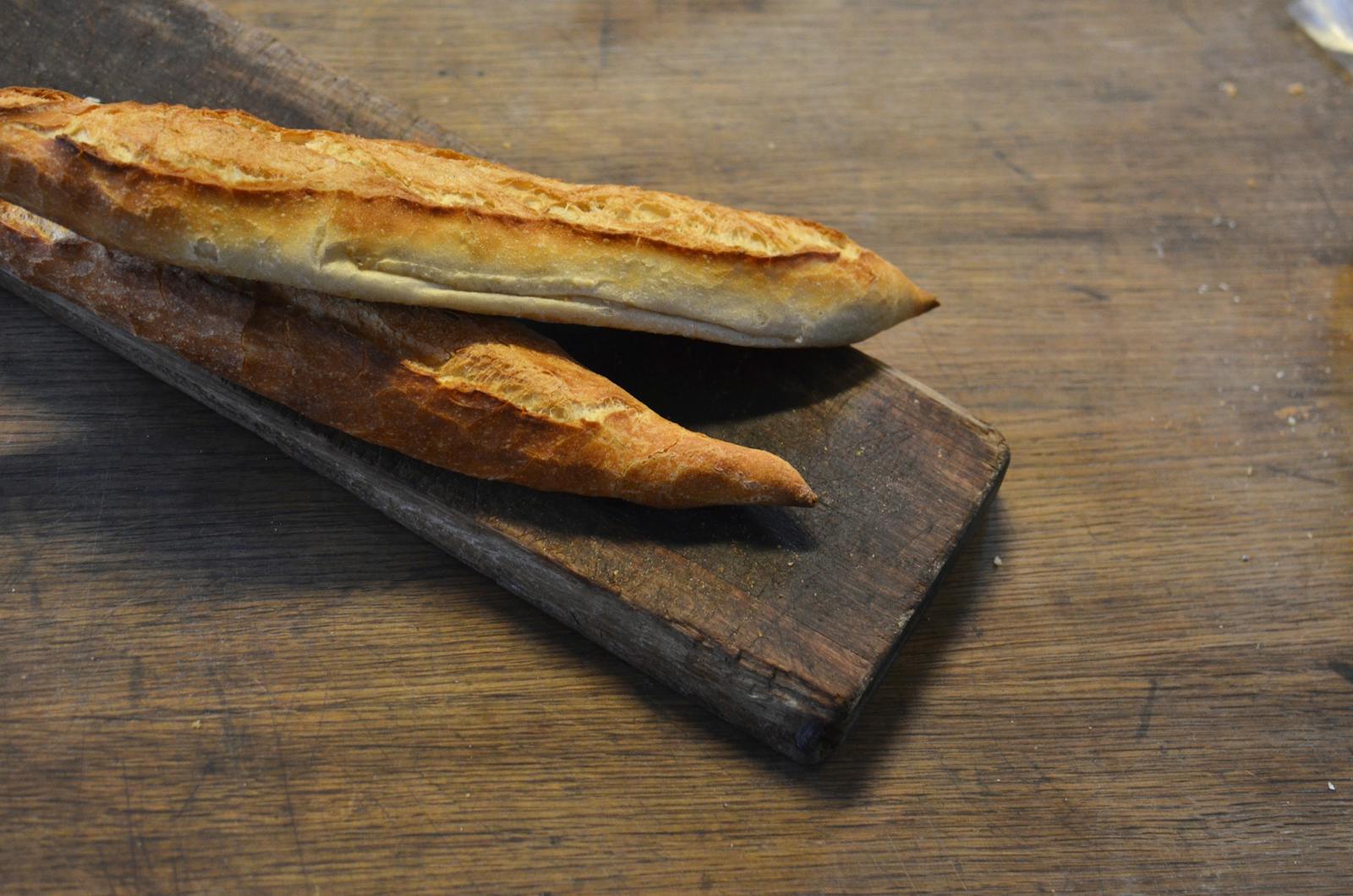
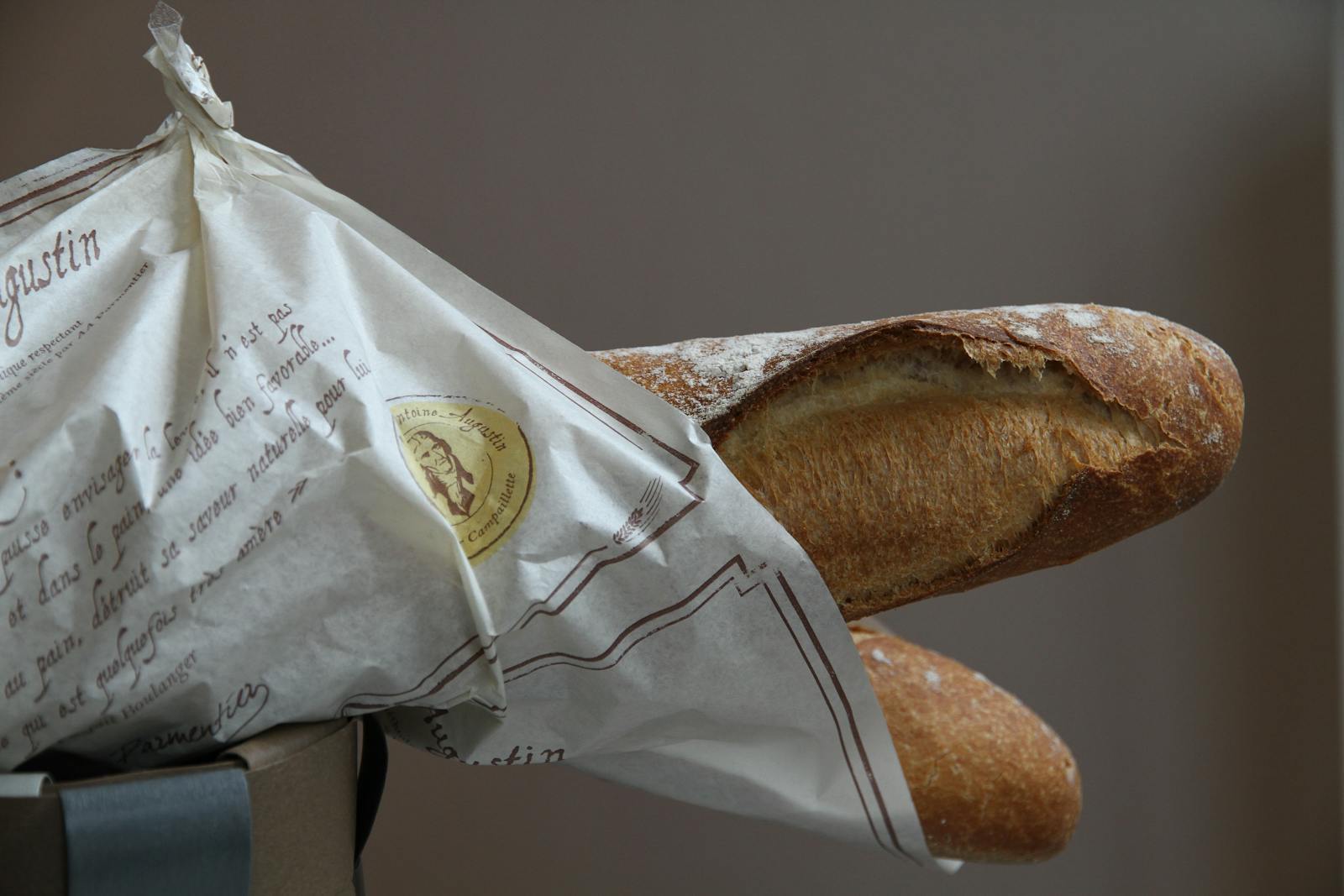
A baguette tasting from a boulangerie that takes the bread seriously — usually a traditional baguette (tradition, by French law) rather than the factory version, which means long fermentation, hand-shaped, baked on stone. Guides will often point out how to recognize a good one at a glance: irregular shape, dark crust, complex scoring pattern, and hollow sound when tapped.
A croissant or pain au chocolat from a viennoiserie specialist, which is a different skill set than bread baking and usually the same shop that makes the best pastries. Good croissants have visible lamination (many thin butter layers), a distinct “shatter” when you bite in, and a buttery interior that isn’t greasy.
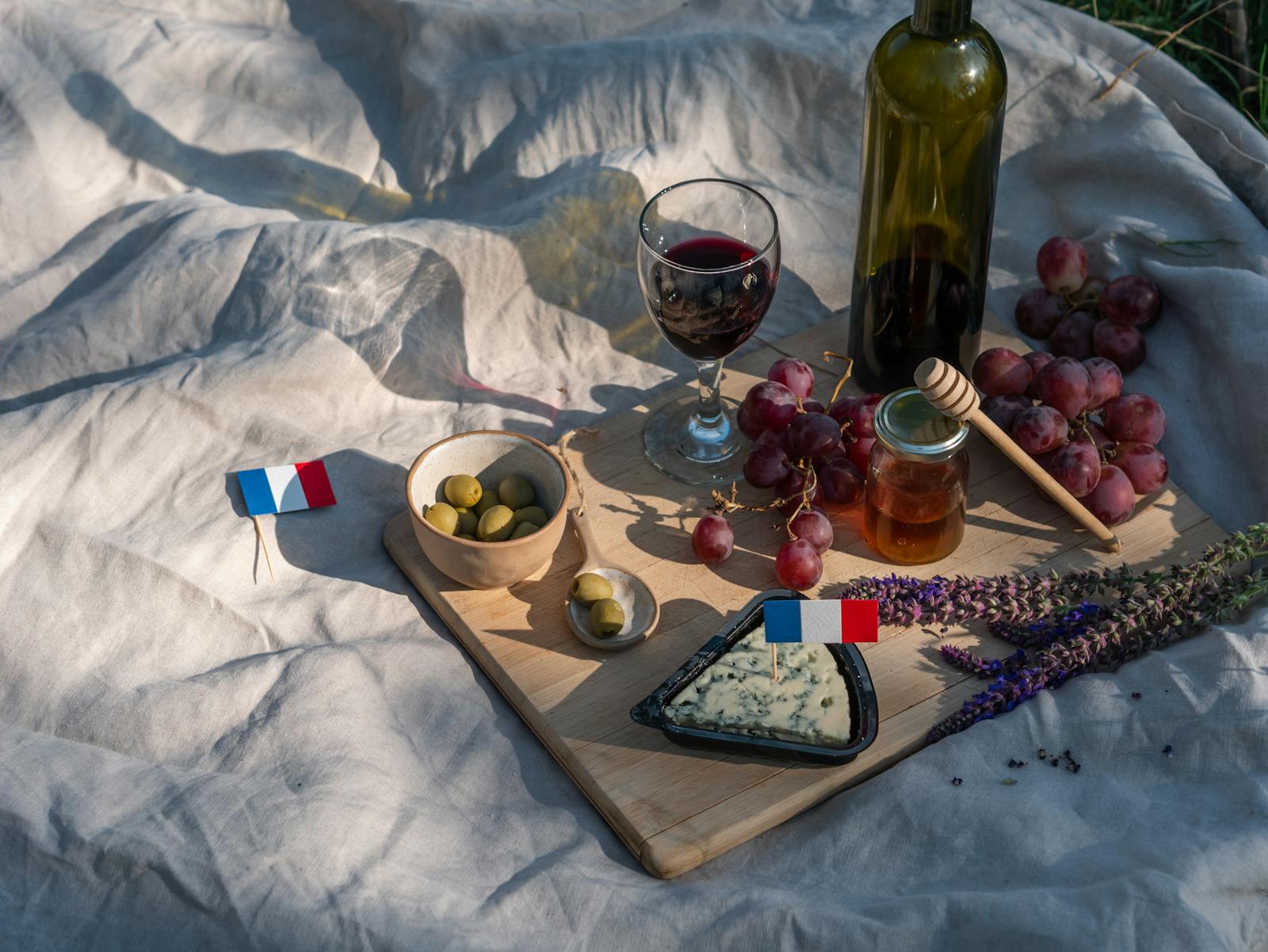
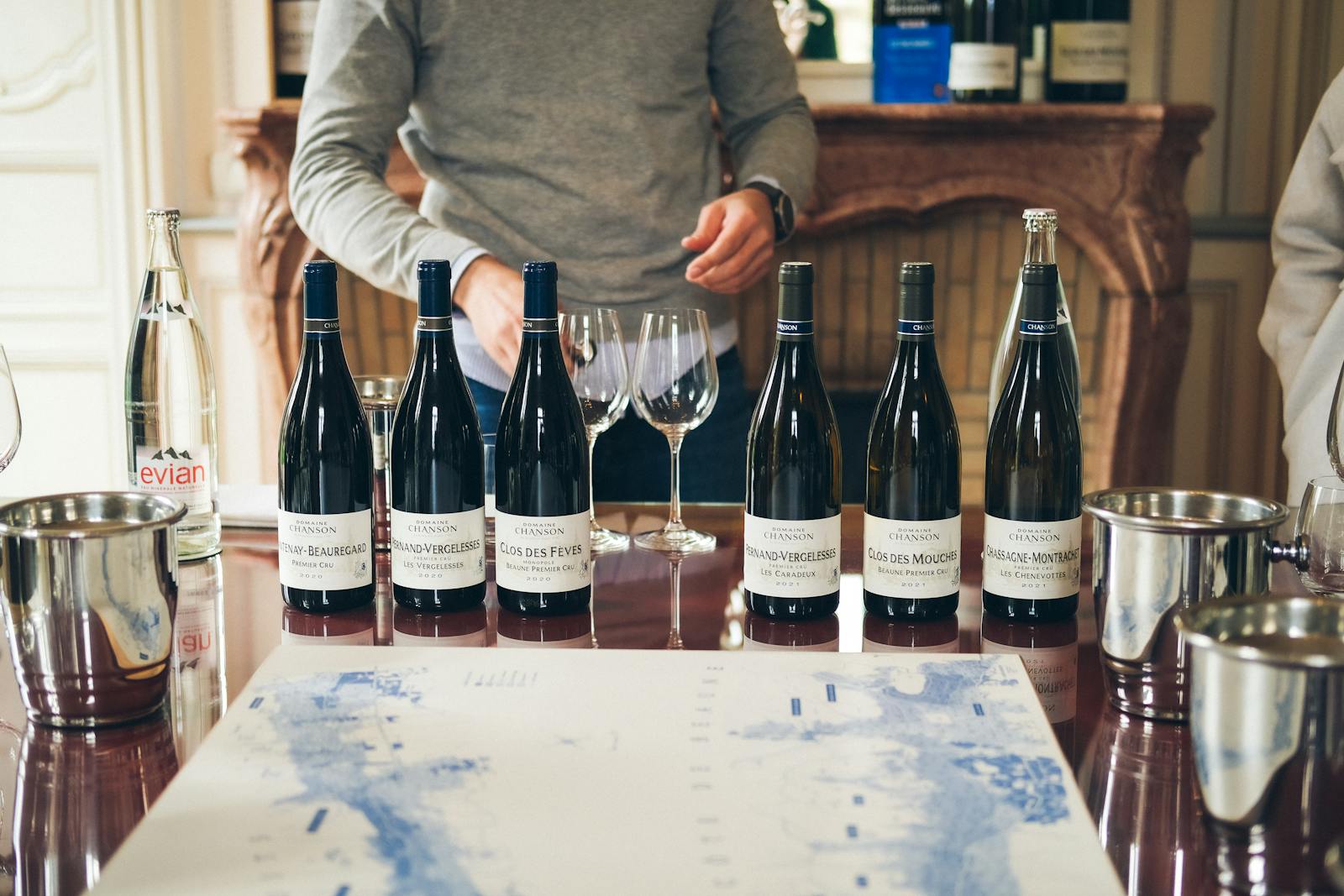
A cheese and wine course, almost always sit-down, typically three or four cheeses representing different French regions (a hard cheese like Comté, a soft like Camembert or Brie, a blue like Roquefort, and sometimes a goat cheese) paired with two wines. This is where the guide earns their keep — the pairing logic gets explained, and you learn more about French cheese in twenty minutes than you’d figure out on your own in a week.
A charcuterie tasting featuring pâté, rillettes, saucisson, and sometimes jambon de Bayonne or jambon de Paris. This stop usually happens at a specialized charcuterie rather than a generic supermarket, which matters because the quality gap is enormous.
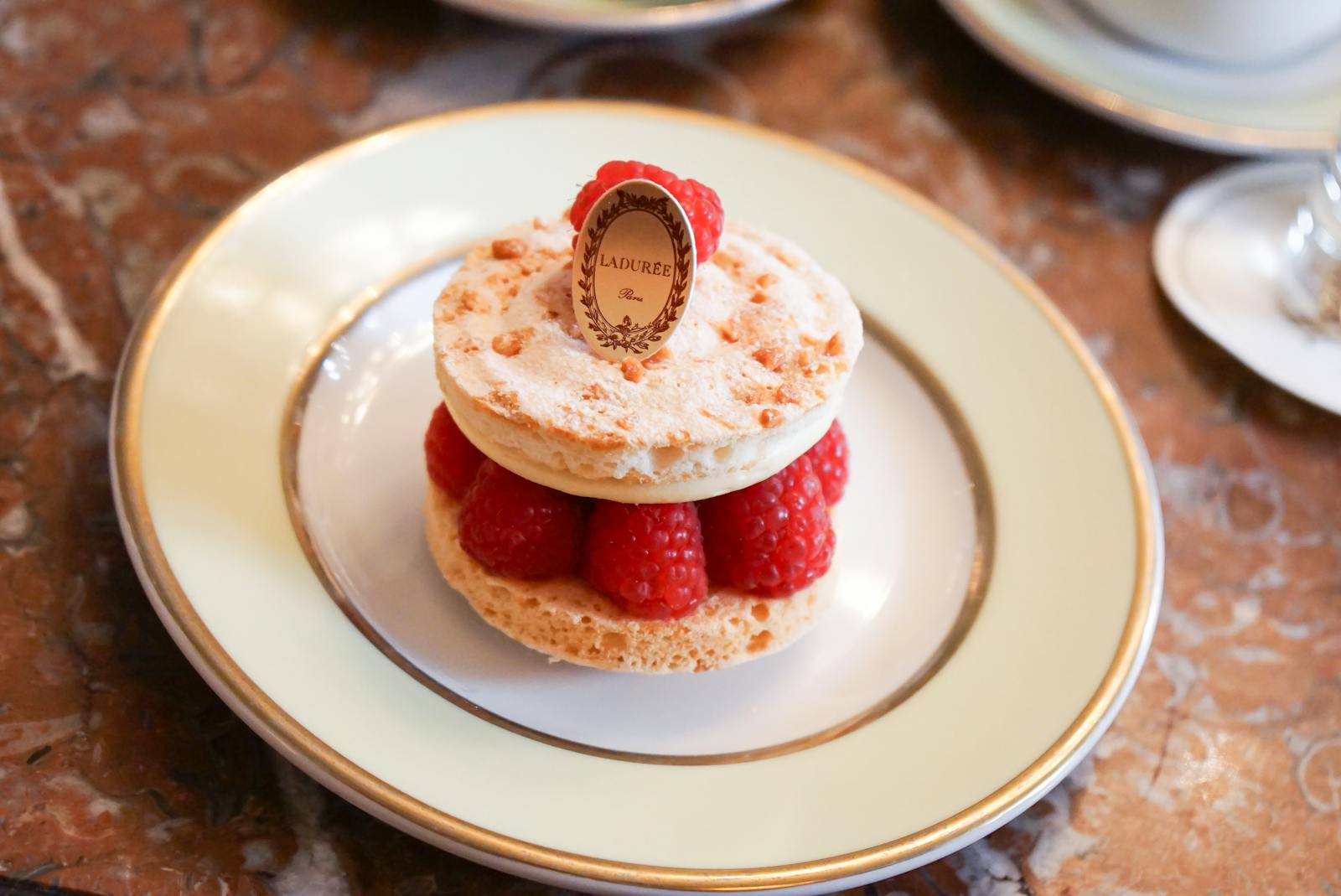
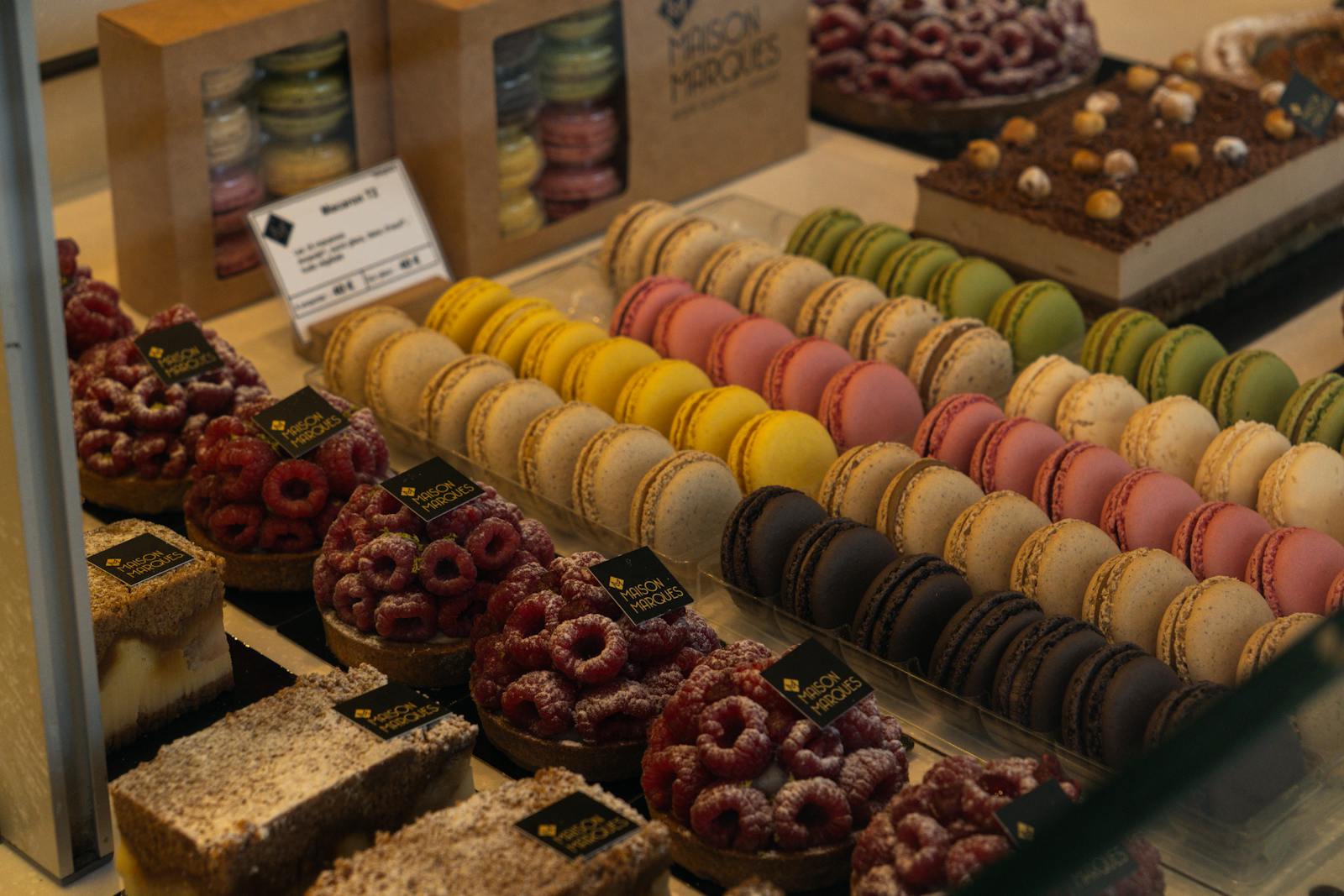
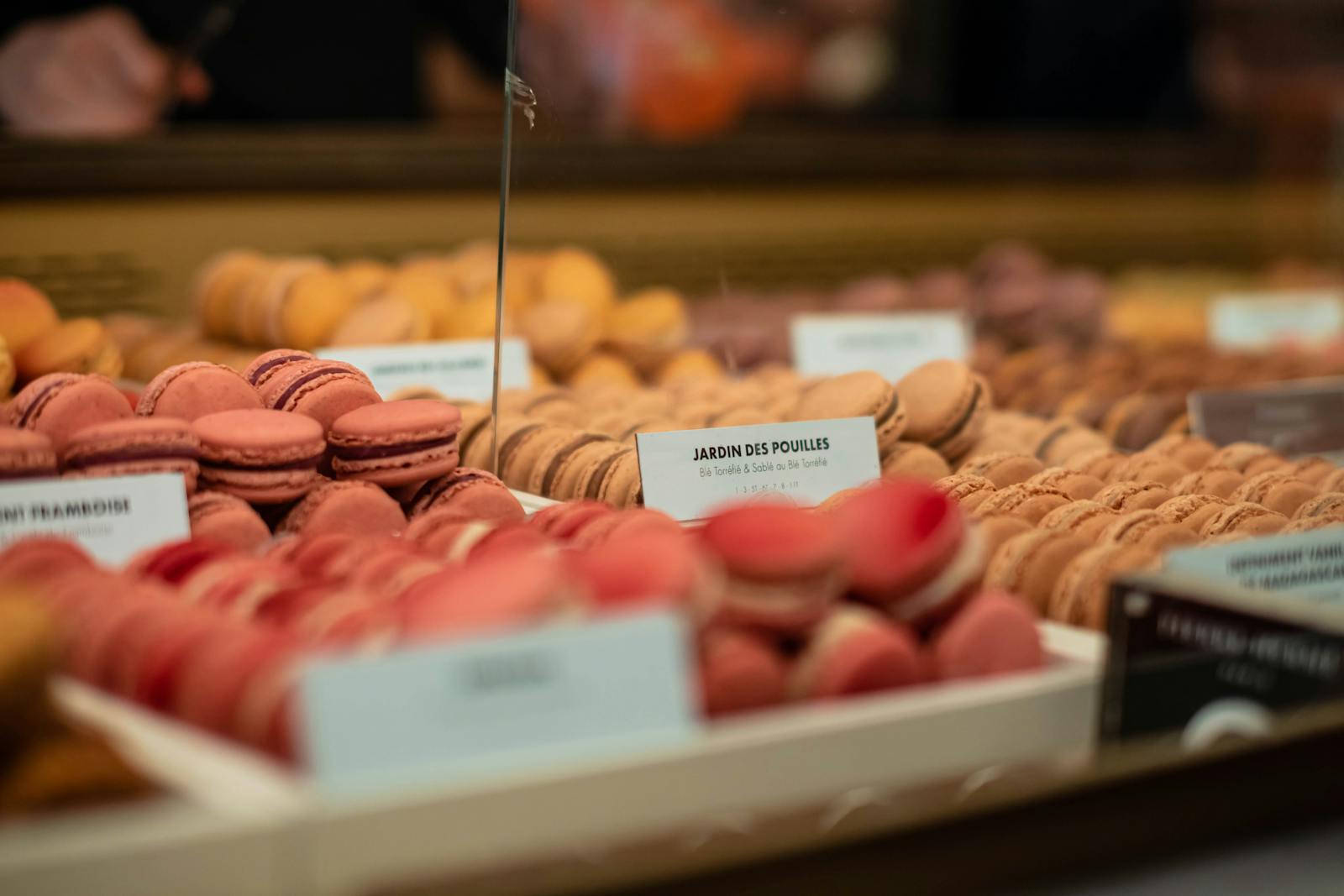
At least one pastry, usually a macaron (often from Ladurée or Pierre Hermé if the tour routes through the Left Bank), an éclair, or a more elaborate creation from a pâtissier specializing in modern French desserts. The Marais tour will often include a chocolatier stop instead or in addition.
Chocolate, from a bean-to-bar chocolatier if the route allows. Paris has a strong modern chocolate scene that most travelers never find on their own because the best chocolatiers are in non-obvious locations.
A surprise stop, which is the Secret Food Tours signature but also shows up on most other operators’ tours in various forms — a falafel, a crêpe, a sit-down bistro bite, or something seasonal that the guide thinks the group should try.
Practical Tips Before You Book
A few things people wish they’d known before their first Paris food tour.
Come hungry — genuinely hungry, not “I had a light breakfast” hungry. The portions are real meal portions, and by the end of a full tour you’ll have eaten the equivalent of a three-course meal plus dessert. Skipping the meal before the tour is the correct move. If you’re doing a late-morning tour, don’t eat breakfast. If you’re doing an afternoon tour, eat only a light breakfast and skip lunch.
Dietary restrictions are manageable but book ahead. All four tours can accommodate vegetarians, pescatarians, and most nut allergies if you notify them at booking. Gluten-free is harder because bread is the backbone of French food culture — you can get a gluten-free version of most tastings, but you’ll be skipping the baguette stop entirely, which removes one of the best parts of the tour. Kosher and halal are extremely difficult to accommodate on a standard tour; consider the Le Marais tour (Tour #4) for more kosher-friendly stops given the Jewish quarter routing, but confirm in advance.
Wear walking shoes. You’re covering two to four kilometers on cobblestone streets, and some of the Montmartre routes involve real hills. Sneakers or comfortable flats. Paris is not the city to break in new boots.
The weather matters less than you’d think. Most food tours happen rain or shine, and the stops are indoors anyway, so a light rain shouldn’t kill the experience. Bring an umbrella for the walking segments. Winter tours are fine — the indoor stops are arguably more comfortable when it’s cold outside — but bring layers.
Tipping is appreciated but not mandatory in France the way it is in the U.S. If your guide is excellent (and based on the review data for all four tours above, they usually are), 10-15% of the tour price per person is a generous and welcomed tip. Nothing below that is an insult; nothing above is necessary.
Book directly through the tour partners rather than third-party consolidators. The prices are the same, the cancellation policies are better, and you’re more likely to get the specific guide roster you’re hoping for. All four tours above are available through the links on this page, which go to the actual operator listings.
Morning vs. afternoon matters. Morning tours (10:30-2:00) catch bakeries at their freshest and markets in full swing, but some shops are quieter. Afternoon tours (3:00-6:30) catch the pre-dinner aperitif culture and tend to include more wine. If you’re a morning person, book morning; if you’re planning a big dinner that night, book afternoon.
Alternatives If None of These Are Right
If a three-and-a-half-hour walking food tour isn’t quite what you’re after, there are a few alternatives.
A Paris cooking class replaces the walking tour with hands-on instruction in a kitchen — you’ll make a classic French dish (often a three-course meal) under the guidance of a professional chef, then eat what you made. This is a better choice for travelers who want to actually learn to cook French food rather than just eat it, and the time commitment is usually five to six hours including the market visit. Expect to pay $200-$275 per person for a small-group class.
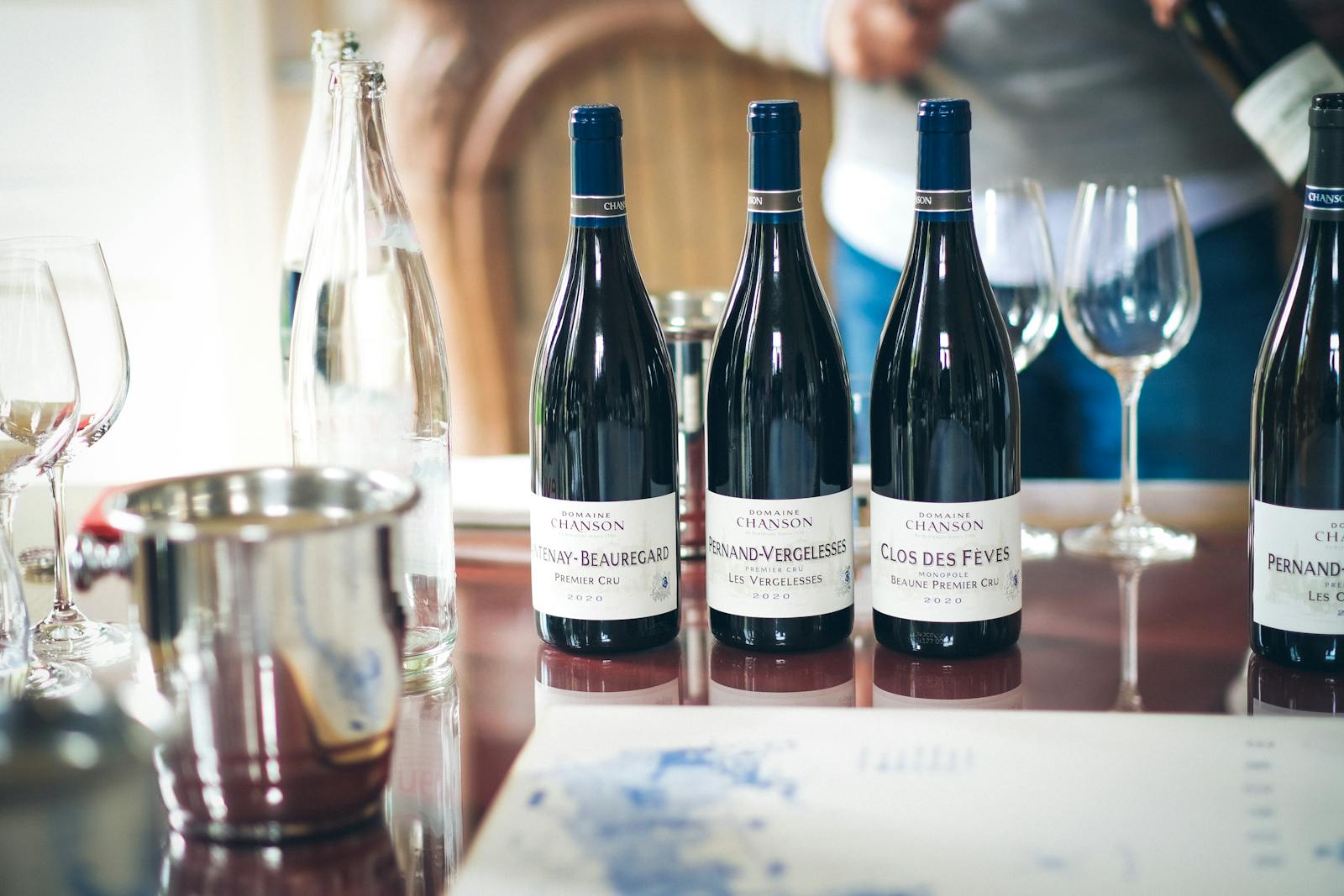
A wine tasting class focuses specifically on French wine rather than food, usually in a two-hour format with a sommelier walking you through five to seven wines from different French regions. Better for travelers who already know they like wine and want to understand the French regional system (Bordeaux, Burgundy, Loire, Rhône, Champagne, Alsace). Pairs well with a food tour on a different day.
A chocolate and pastry tour narrows the focus to sweet stops only — typically three hours covering four to six of Paris’s best chocolatiers and pâtissiers. Good for travelers with a sweet tooth who already know the savory side of French food or plan to handle dinners on their own.
A Seine dinner cruise is a different format altogether — sit-down multi-course meal on a boat with a moving view of the lit-up monuments — and serves a different purpose than a walking food tour. Both are worth doing on a longer trip, but they’re not substitutes for each other. See our full writeup on Paris Seine dinner cruises for that experience.
More Paris and France Guides
If you’re building out a food-focused Paris trip, the rest of our France coverage can help round out the itinerary. The Eiffel Tower tickets guide breaks down the four genuine ways to get up the tower and which one actually skips the lines. For the classical museum day, the Paris Louvre tickets guide covers how the timed-entry system actually works in 2026, and the Orsay Museum tickets guide handles the second-most-important museum in the city (which a lot of people actually prefer).
Day trips work well with a food-tour-centered trip because they give you a break from Paris walking. The Versailles day trip guide covers the Louis XIV palace and gardens option, the Normandy D-Day beaches guide is the long-haul historical day trip, and the French Riviera day tours from Nice guide covers how to do Monaco and Monte Carlo if you’re extending the trip south. For Paris-specific icons beyond food, the Arc de Triomphe rooftop guide and the Seine sightseeing cruises guide round out the classical Paris list.
Which Tour Should You Actually Book?
If you only have time for one food tour and no strong neighborhood preference, Tour #1 (Secret Food Tours Paris) is the safest answer. The review volume is enormous, the price is reasonable, the route covers the classical Left Bank, and the guides are consistently strong. It’s the one you’d recommend to a friend who asked you for a single pick.
If you’re already planning to explore Montmartre anyway, book Tour #2 (Montmartre Hill French Gourmet) and combine the hill climb with the food experience. The sit-down wine and cheese pairing is the differentiator, and the neighborhood-specific routing is worth the $42 premium over the Left Bank tour.
If you want the history and context more than the food quantity, book Tour #3 (Devour Paris Ultimate). The guides here lean more academic and the tastings are generous enough to satisfy most appetites.
If you already know you want the Marais and the highest tasting count of any Paris food tour, book Tour #4 (Le Marais Food Tour). Ten-plus stops in one of the most food-dense neighborhoods in the city, at the same $102.79 price as Tour #1.
All four are rated 5.0 stars across thousands of reviews, which is not a coincidence — Paris food tours as a category are unusually well-run, partly because the guide pool is genuinely expert and partly because the food stops themselves are so good that it’s hard to ruin the experience. Book whichever one matches your neighborhood and schedule and skip any hesitation about whether it’s worth the money. It is.
Final Word
Paris is a city where the right three hours with the right local can teach you more about French food than a month of eating on your own ever will. The four tours above are the market leaders for a reason — they have the best guides, the best routes, and the most consistent reviews. The only real choice is which neighborhood you want to meet over a wine and cheese pairing, and any of the four answers to that question is a good one.
Book early during peak season (May through September and Christmas week) — the popular time slots on all four tours sell out ten to fourteen days in advance, and the best guides get claimed first. Off-season you can usually book two or three days ahead, though Friday and Saturday slots still go quickly. And come hungry.
See Also — Latest Paris & France Guides: Seine dinner cruises guide, Palais Garnier tickets guide, Mont Saint-Michel day trip guide, Paris Catacombs tickets guide, Sainte-Chapelle tickets guide, Montmartre walking tours guide, Giverny Monet day trip guide, Paris hop-on hop-off bus tours guide, Loire Valley castles day trip guide, Moulin Rouge cabaret shows guide, Saint-Emilion and Bordeaux wine tours guide, Disneyland Paris tickets guide, Paris bike tours guide.